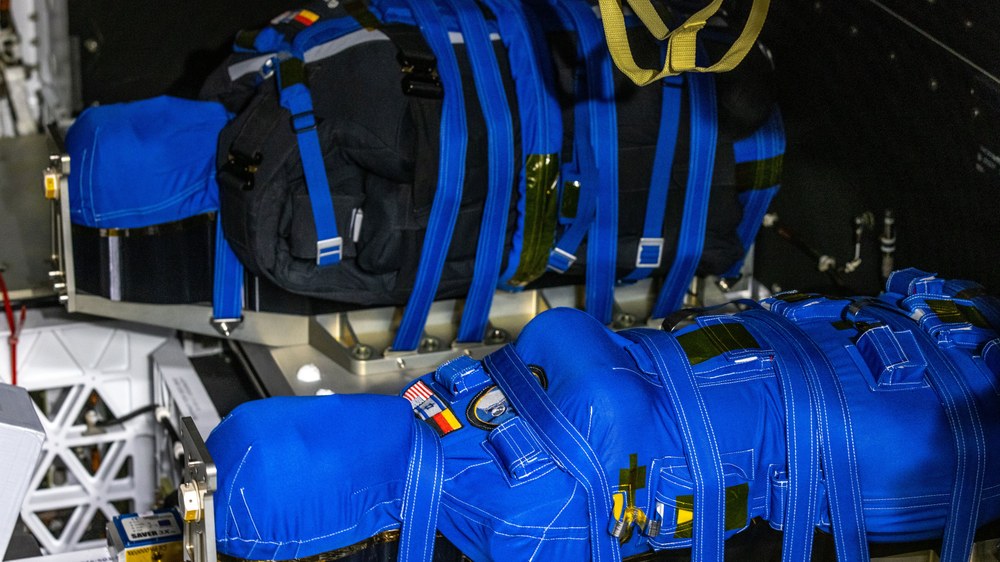
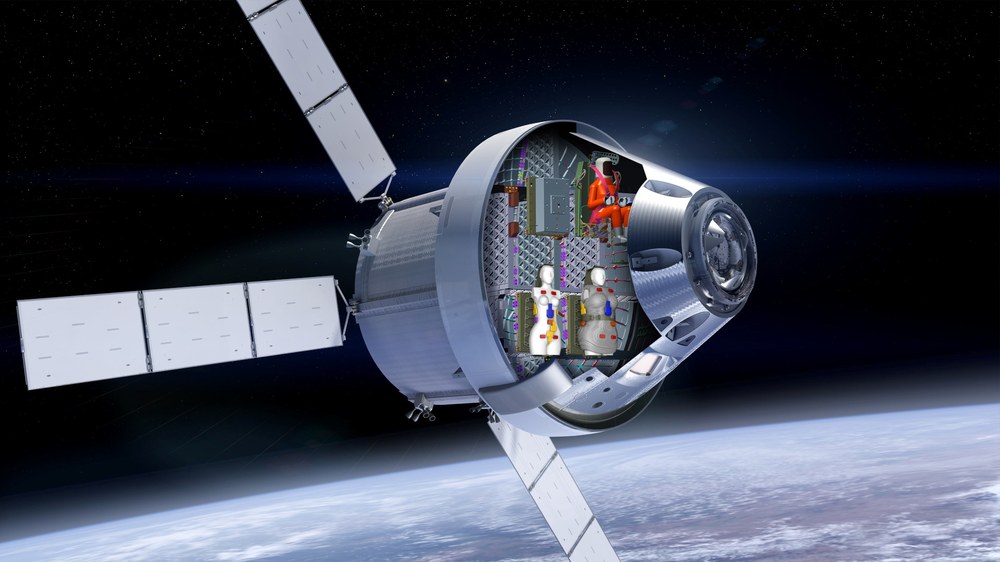
Há uma imagem que nos ficou na cabeça esta semana: duas figuras humanas sentadas dentro da Orion, quietas, cheias de sensores, a fazerem aquilo que nenhum astronauta podia fazer em 2022. Helga viajou sem proteção. Zohar levou um colete pesado, pensado para defender órgãos sensíveis de partículas solares. Quase quatro anos depois do Artemis I, os dados destas "gémeas lunares" começam a responder a uma pergunta muito prática: como protegemos pessoas reais quando o Sol decide disparar contra uma missão à Lua?
A resposta ainda não é uma armadura de ficção científica. É mais interessante por ser menos cinematográfica. A ESA destacou a 28 de agosto de 2026 novos resultados do Matroshka AstroRad Radiation Experiment, ou MARE. O estudo, publicado este mês em Science Advances e detalhado pelo DLR, sugere que um colete de proteção seletiva pode reduzir a dose efetiva de radiação em 58,2% num cenário semelhante à tempestade solar de agosto de 1972. Essa tempestade ocorreu entre a Apollo 16 e a Apollo 17; se tivesse apanhado astronautas em trânsito lunar sem proteção adequada, poderia ter sido perigosa.
Queremos voltar à Lua, mas o corpo continua a ser terrestre
Nós falamos muito de foguetões, motores, janelas de lançamento e órbitas. Falamos menos da fragilidade biológica que entra no veículo. Fora da atmosfera e do campo magnético da Terra, a radiação deixa de ser um número num manual de segurança e passa a ser um limite de missão. A radiação cósmica galáctica é uma presença crónica; as tempestades solares são o susto agudo, aquela descarga de partículas que pode transformar horas de exposição num problema médico sério.
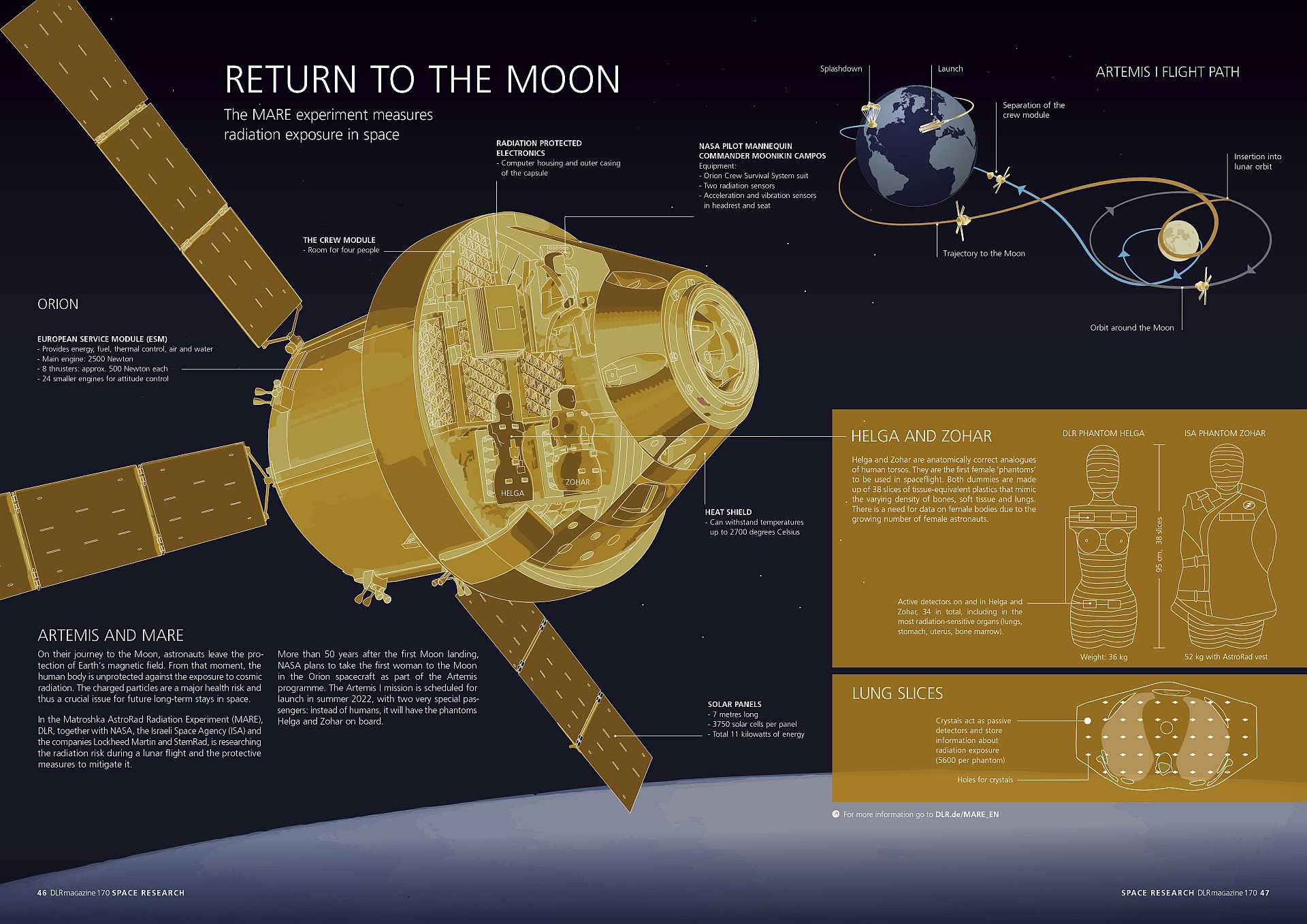
É por isso que o MARE importa agora. O Artemis I foi uma missão sem tripulação, lançada em novembro de 2022, mas não viajou vazia. A experiência liderada pelo German Aerospace Center colocou dois manequins femininos, construídos em 38 camadas de materiais equivalentes a ossos, órgãos e tecido mole, dentro da cápsula Orion. Cada um carregava milhares de dosímetros. Helga funcionou como referência desprotegida; Zohar vestiu o AstroRad, desenvolvido pela StemRad com parceiros como Lockheed Martin e a Israel Space Agency. A comparação entre as duas não era uma metáfora: era uma forma de medir, órgão por órgão, o que a radiação faria a um corpo humano aproximado.
O número bonito vem de um cenário que não aconteceu
Há aqui uma nuance que convém não perdermos. A Orion não atravessou uma grande tempestade solar durante o Artemis I. O que os investigadores fizeram foi usar medições reais da missão, incluindo passagens pelos cinturões de Van Allen, para calibrar modelos e depois extrapolar para eventos históricos. A equipa testou, entre outros, um cenário inspirado na tempestade de agosto de 1972 e outro semelhante ao evento de outubro de 1989. No primeiro, o colete poderia baixar a dose efetiva de 204,2 mSv para 85,3 mSv num modelo corporal mais completo; no segundo, a redução calculada foi de 36,9%.
Isto não diminui a descoberta. Pelo contrário, torna-a mais séria. Ciência espacial raramente oferece o ensaio perfeito no dia exato em que queremos; oferece dados imperfeitos, física conhecida e modelos que precisam de ser validados. A cobertura da Ars Technica sublinha esse ponto: os modelos foram comparados com medições do voo e ficaram dentro de uma margem estreita antes de serem usados para simular tempestades solares. Em termos simples, os cientistas não inventaram uma tempestade conveniente. Pegaram numa viagem real e perguntaram o que teria acontecido se o Sol tivesse escolhido uma semana pior.
Proteger tudo pode ser pior do que proteger bem
O detalhe mais contraintuitivo é que o AstroRad não tenta cobrir o corpo todo como um fato medieval. O colete concentra material rico em hidrogénio sobre tecidos e órgãos mais sensíveis, como medula óssea, pulmões, estômago, mamas e ovários. Essa escolha parece incompleta à primeira vista, mas é precisamente a lógica do projeto: em espaço profundo, massa e mobilidade são tão importantes como proteção. Um traje que reduz dose mas impede movimentos dentro de uma cápsula pequena não resolve o problema certo.
Os cálculos adicionais citados pelo DLR mostram que a proteção direcionada foi cerca de 30% mais eficaz, para a dose efetiva, do que distribuir a mesma massa de blindagem uniformemente pelo corpo. A diferença é quase uma lição de engenharia: nem sempre precisamos de mais material; às vezes precisamos de o colocar onde muda o risco. A Space.com também nota que o vestuário poderia complementar o abrigo de tempestade da Orion, sobretudo nos momentos em que a tripulação precisa de se deslocar ou executar tarefas fora da zona mais protegida.
O que esta notícia muda para Artemis, Lua e Marte
Gostamos de imaginar a exploração espacial como sequência de grandes marcos: lançamento, órbita, alunagem, pegadas. Mas o progresso real também vive nestas peças discretas. Um colete de 26 quilos na Terra não é uma solução final para Marte, nem elimina o risco de radiação galáctica durante viagens longas. Ainda será preciso melhorar massa, conforto, logística, protocolos de abrigo e integração com veículos e habitats. Mesmo assim, o resultado desloca a conversa de "será que funciona?" para "quando, como e para quem funciona melhor?".
Para nós, essa é a parte humana da notícia. A próxima era lunar não será vencida apenas por motores mais potentes ou câmaras mais nítidas. Será vencida por sistemas que aceitam que astronautas são corpos vulneráveis a viajar por um ambiente hostil. Helga e Zohar não trouxeram fotografias bonitas da Lua; trouxeram mapas invisíveis de risco. E talvez seja esse o tipo de mapa que decide se a exploração profunda deixa de ser uma visita curta e passa a ser uma presença sustentável.
aleMXcore 30/08/2026
há duas frases aqui que não me cabem na mesma história. uma: A resposta ainda não é uma armadura de ficção científica. depois: Resultados divulgados em agosto mostram que o colete AstroRad, testado no Artemis I com os manequins Helga e…. qual é o post a sério?
storm455z 30/08/2026
so MARE on one side and DLR on the other, and then: Results released in August show that the AstroRad vest, tested on Artemis I with the Helga and Zohar phantoms, could cut…. that's a lot of moving parts for one post. who actually holds the leverage if this goes through? idk
anaflare72 30/08/2026
eSA under “We want to return to the Moon, but the body is still terrestrial” is the angle i didn't expect. the rest of the article can argue about timing; that section is the actual claim. does it hold if you ignore the hype paragraph at the top?
xSam23 30/08/2026
então DLR de um lado, ESA do outro, e depois: Resultados divulgados em agosto mostram que o colete AstroRad, testado no Artemis I com os manequins Helga e Zohar, pode reduzir…. são peças a mais para um único argumento. quem fica com a alavanca se isto avançar?
vevx322 30/08/2026
@storm455z maybe, but “58.2%” is where i get stuck. The ansswer is not yet a science-fiction suit of armor. feels like a different argument than yours.
kira250TV 30/08/2026
@storm455z maybe, but “58.2%” is where i get stuck. We talk a lot about rockets, engines, launch windows, and orbits. feels like a different argument than yours
mel815C 31/08/2026
@aleMXcore not sure that's what the piece is saying. The counterintuitive detail is that AstroRad does not try to cover the whole body like medieval…. the DLR bit is what i'd actually push on
danski110 31/08/2026
@xSam23 u're arguing timing; i'd argue structure. DLR and ESA in the same story — Results released in August show that the AstroRad vest, tested on Artemis I with the Helga and…. that's a lot of moving prts.
chrisSpark 31/08/2026
eSA em “Queremos voltar à Lua, mas o corpo continua a ser terrestre” foi o ângulo que não esperava. o resto pode ser timing; essa secção é a tese. aguenta se ignorarmos o hype do início?
spaski692 31/08/2026
@kira250TV not sure that's what the piece is saying. The counterintuitive detail is that AstroRad does not try to cover the whole body like medieval…. the ESA bit is what i'd acttually push on
hugo4860x 31/08/2026
@storm455z em “Proteger tudo pode ser pior do que proteger bem” o detalhe 36,9% é o que me importa. o resto parece encenação à volta dessa figura.
bruno2790T 31/08/2026
@hugo4860x not sure that's what the piece is saying. The counterintuitive detail is that AstroRad does not try to cover the whole body like medieval…. the MARE bit is what i'd actually push on.
lupal176 01/09/2026
@spaski692 “58,2%” soozinho parece limpo mas o artigo não para aí. O detalhe mais contraintuitivo é que o AstroRad não tenta cobrir o corpo todo como um fato medieval. é aí que eu discordava.
anaflare72 01/09/2026
@chrisSpark maybe,but “58.2%” is where i get stuck. The counterintuitive detail is that AstroRad does not try to cover the whole body like medieval…. feels like a different argument than yours.
glitch14tt 01/09/2026
MARE under “We want to return to the Moon,but the body is still terrestrial” is the angle i didn't expect. the rest of the article can argue about timing; that section is the actual claim. does it hold if you ignore the hype paragraph at the top?
bluBRraid 01/09/2026
@anaflare72 you're arguing timing; i'd argue structure. DLR and MARE in the same story — Results released in August show that the AstroRad vest,tested on Artemis I with the Helga and…. that's a lot of moving partts haha
andre75GG 01/09/2026
@storm455z em “Proteger tudo pode ser pior do que proteger bem” o detalhe 36,9% é o que me importa. o resto parece encenação à volta dessa figura? haha
mel272zz 02/09/2026
@storm455z em “Queremos voltar à Lua, mas o corpo continua a ser terrestre” o detalhe 36,9% é o que me importa. o resto parece enceenação à volta dessa figura.
nyx401x 02/09/2026
@andre75GG two things don't sit together for me here. The counterintuitive deail is that AstroRad does not try to cover the whole body like medieval…. then later: Results released in August show that the AstroRad vest,tested on Artemis I with the…. which one are you anchoring on?
pingcraft948 02/09/2026
sobre AstroRad no Artemis I: o colete que pode mudar viagens lunares: o detalhe de 60% é o que eu discutia a sério. A resposta ainda não é uma armadura de ficção científica. isso é o facto que segura o artigo ou só o gacho?
voidtx200 03/09/2026
@bluBRraid yah, same lane — The answer is not yet a science-fiction suit of armor. i'd still watch MARE before calling it settled though
beatriz563T 03/09/2026
@chrisSpark under “The headline number comes from a storm that did not happen” the 60% detail is what actually matters to me. rest reads like setup around that one figure tbh
nox2983xx 03/09/2026
@hugo4860x mybe, but “58.2%” is where i get stuck. Results released in August show that the AstroRad vest, tested on Artemis I with the Helga and…. feels like a different argument than yours.
mates50 03/09/2026
@voidtx200 agreed on the vibe. MARE vs DLR in the same pst is still wild to me — which side do you actually trust?
hugo171M 04/09/2026
dLR em “Proteger tudo pode ser pior do que proteger bem” foi o ângulo que não esperava. o resto pode ser timing; essa secção é a tese. aguenta se ignorarmos o hype do início?
bluBRraid 04/09/2026
@andre75GG duas coisas aqui não me cabem juntas. O detalhe mais contraintuitivo é que o AstroRad não tenta cobrir o corpo todo como um fato medieval. depois: Nós falamos muito de foguetões, motores, janelas de lançamento e órbitas. em qual te firmas?
frorALshade 04/09/2026
@danski110 same read on “The headline number comes from a storm that did not happen”. We talk a lot about rockets, engines, launch windows, and orbits. curious what you make of DLR in that section.
vik589z 04/09/2026
@nox2983xx under “The headline number comes from a storm that did not happen” the 58.2% detail is what actually mattters to me. rest reads like setup around that one figure
guinode9102 04/09/2026
ok but 58.2% vs 60% in the same piece is a hell of a jump. MARE can look inevitable on paper and still be a rumor. which of those two figures do we actually trust?
filipe284xX 05/09/2026
the 60% number is what actually stopped me, not the headline. ESA is at the center of this and the rest of the piece feels like context around it. does anyone else read it that way or am i stretching it?
sora228G 05/09/2026
@bluBRraid re AstroRad on Artemis I: The Vest That Could Change Lunar Travel: the 58.2% detail is what i'd argue about, not your framing. The answer is not yet a science-fiction suit of armor
nunrALglow70 05/09/2026
the 36.9% number is what actually stopped me,not the headline. ESA is at the center of this and the rest of the piece feels liike context around it. does anyone else read it that way or am i stretching it?...
joeu139 05/09/2026
re AstroRad on Artemis I: The Vest That Could Change Lunar Travel: the 36.9% detail is the part i'd actually argue about. The answer is not yet a science-fiction suit of armor. is that the real load-bearing fact or just the hook?
danski110 06/09/2026
@nunrALglow70 hm — 3.69% at DLR is the paragraph i'd fight over. what happens to your read if that number gets revised?
isabel19x 06/09/2026
@pingcraft948 re AstroRad on Artemis I: The Vest That Could Change Lunar Travel: the 36.9% detail is what i'd argue about, not your framing. There is an image that stayed with us this weeek: two human-shaped figures seated inside Orion,….
haze92x 06/09/2026
Resultados divulgados em agosto mostram que o colete AstroRad,testado no Artemis I com os manequins Helga e Zohar, pode reduzir…. ok, mas depois aparece 58,2% e a escala muda. é essa figura que eu queria ver desmontada — o resto parece contexto à volta
xAsh78 06/09/2026
the 60% number is what actually stopped me, not the headline. DLR is at the center of this and the rest of the piece feels like context around it. does anyone else read it that way or am i stretching it?
xSofia17 07/09/2026
@anaflare72 sobre AstroRad no Artemis I: o colete que pode mudar viagens lunares: o detalhe 58,2% é o que eu discutia, não o teu enquadramento. Nós falamos muito de foguetões, motores, janelas de lançamento e órbitas.
cade727 07/09/2026
@storm455z sorbe AstroRad no Artemis I: o colete que pode mudar viagens lunares: o detalhe 60% é o que eu discutia,não o teu enquadramento. Resultados divulgados em agosto mostram que o colete AstroRad, testado no Artemis I com os….
kira250TV 07/09/2026
two things in here don't sit together for me. first: The counterintuitive detail is that AstroRad does not try to cover the whole body like medieval armor. then later: There is an image that stayed with us this week: two human-shaped figures seated inside Orion,silent,…. which one is the actual story?
lootDash292 07/09/2026
eSA under “Shielding everything can be worse than shielding well” is the angle i didn't expect. the rest of the article can argue about timing; tat section is the actual claim. does it hold if you ignore the hype paragraph at the top?
ray606W 07/09/2026
@filipe284xX duas coisas aqui não me cabem juntas. O detalhe mais contraintuitivo é que o AstroRad não tenta cobrir o corpo todo como um fao medieval. depois: Resultados divulgados em agosto mostram que o colete AstroRad, testado no Artemis I com…. em qual te firmas?
xyuki93 07/09/2026
@nox2983xx re AstroRad on Artemis I: The Vest That Could Change Lunar Travel: the 58.2% detail is what i'd argue abouut, not ur framing. The answer is not yet a science-fiction suit of armor.
pingcraft948 08/09/2026
@chrisSpark sobre AstroRad no Artemis I: o colete que pode mudar viagens lunares: o dtealhe 58,2% é o que eu discutia, não o teu enquadramento. Há aqui uma nuance que convém não perdermos.
hawk30V 08/09/2026
@haze92x under “We want to return to the Moon, but the body is still terrestrial” the 60% detail is what actually matters to me. restt reads like setup around that one figure.
anaflare72 09/09/2026
the “The headline number comes from a storm that did not happen” section is the part that actually matters. We talk a lot about rockets, engines, launch windows, and orbits. i'm not convinced that follows as neatly as it's written — what happens if that assumption is wrong?...
xSofia17 09/09/2026
re AstroRad on Artemis I: The Vest That Could Change Lunar Travel: the 60% detail is the part i'd actually argue about. We talk a lot about rockets,engines, launch windows, and orbits. is that the real load-bearing fact or just the hook?
hugo3135V 09/09/2026
re AstroRad on Artemis I: The Vest That Could Change Lunar Travel: the 36.9% detail is the part i'd actually argue about. We talk a lot about rockets, engines, launch windows, and orbits. is that the real load-bearing fact or just the hook?
stoKAlstorm 09/09/2026
@sora228G hm — 36,9% na MARE é o parágrafo que eu discutia. o teu read aguenta se esse número mudar?
ash558L 09/09/2026
sobre AstroRad no Artemis I: o colete que pode mudar viagens lunares: o detalhe de 36,9% é o que eu discutia a sério. O detalhe mais contraintuitivo é que o AstroRad não tenta cobrir o corpo todo coomo um fato medieval. isso é o facto que segura o artigo ou só o gancho?
bruno2790T 09/09/2026
Results released in August show that the AstroRad vest, tested on Artemis I with the Helga and Zohar phantoms, could cut…. fine, but then 60% shows up and the scale filps. that's the bit i want unpacked more — the rest reads like context around that one figure.
lara89B 10/09/2026
@pingcraft948 not sure that's what the piece is saying. The counterintuitivve detail is that AstroRad does not try to cover the whole body like medieval…. the MARE bit is what i'd actually push on
nyx50x 10/09/2026
@danski110 same read on “Shielding everything can be worse than shielding well”. We talk a lot about rockets, engines, launch windows, and orbits. curious what you make of ESA in that section.