A previsão do tempo costuma ser julgada no momento mais banal: olhas pela janela, olhas para o telemóvel, e decides se levas casaco. Mas a 3 de setembro de 2026, a Google tentou transformar essa rotina num problema de infraestrutura global. O novo WeatherNext 3, desenvolvido pela Google DeepMind e pela Google Research, promete previsões mais frequentes, mais nítidas e alimentadas por observações reais quase em direto.
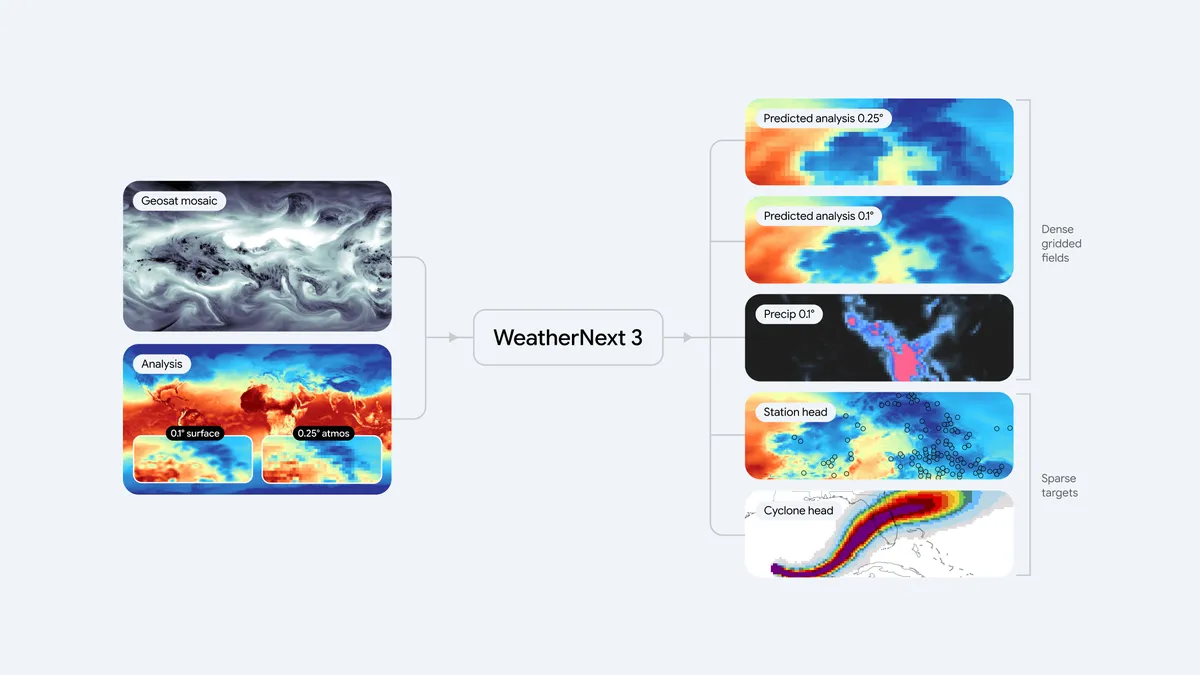
Segundo o anúncio oficial da Google, o modelo passa a integrar dados de satélite geoestacionário, refresca previsões de hora a hora, chega a resolução de 5 km para algumas variáveis e já está a entrar no Google Search, Gemini, Maps, Google Maps Platform e Cloud. Não é apenas uma demo científica: é uma atualização que pode aparecer no ecrã de milhões de pessoas quando planeiam uma viagem, um evento ou uma rota de trabalho.
Argumentos a favor
O primeiro argumento é velocidade. Muitos modelos tradicionais dependem de simulações físicas complexas e ciclos de dados que podem chegar com horas de atraso. A Google diz que o WeatherNext 3 aprende diretamente com mosaicos de satélite globais e observações de estações meteorológicas, produzindo uma leitura mais contínua da atmosfera. Para chuva, frentes rápidas ou calor local, uma previsão antiga por poucas horas pode ser a diferença entre informação útil e ruído.
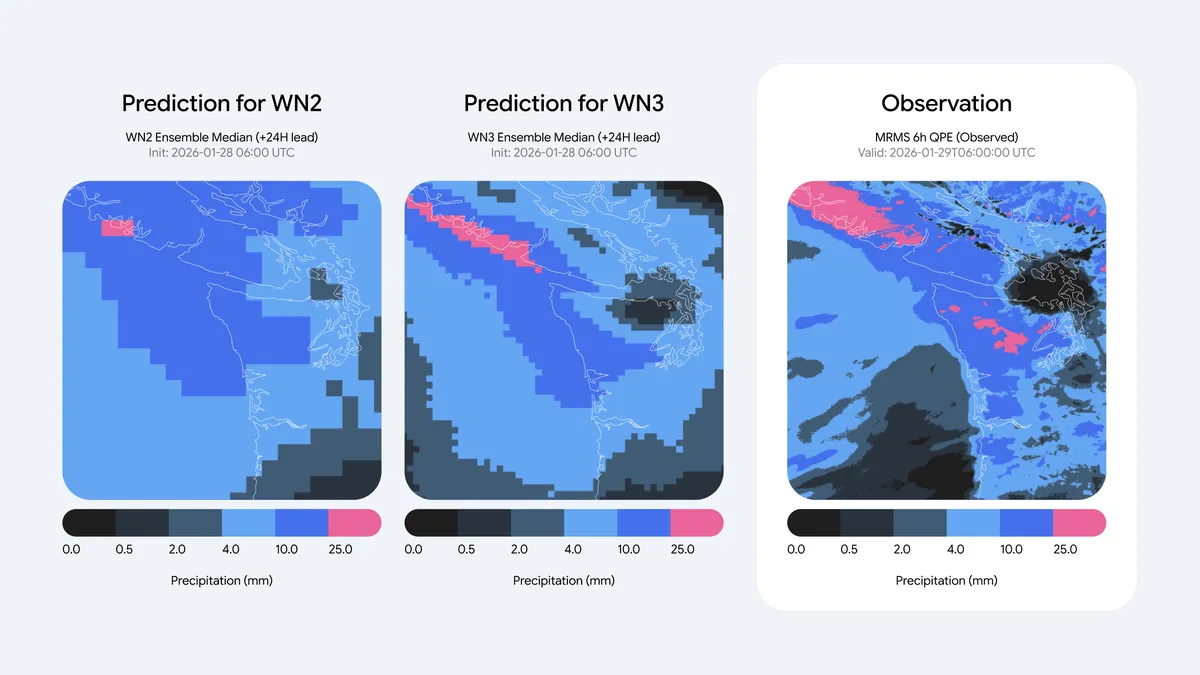
O segundo argumento é detalhe. A página técnica do Google for Developers descreve previsões globais inicializadas a cada hora, até 0,05 graus, cerca de 5 km, em variáveis de superfície calibradas por estações. A própria Google afirma que isto é cerca de cinco vezes mais fino do que o WeatherNext 2 em certos casos. Para regiões costeiras, vales, montanhas ou cidades onde a meteorologia muda em poucos quilómetros, esse detalhe é o ponto.
O terceiro argumento é distribuição. Um modelo climático avançado costuma ficar preso a centros meteorológicos, supercomputadores ou equipas especializadas. Aqui, a Google fala em BigQuery, Earth Engine, Google Cloud Storage e Google Maps Platform Weather API. Isso coloca dados de previsão nas mãos de investigadores, empresas de logística, operadores de energia renovável e programadores que talvez nunca montassem uma cadeia meteorológica completa.
Riscos e limitações
O risco óbvio é a confiança excessiva. A meteorologia não deixou de ser probabilística só porque usa IA. A própria Google inclui uma nota importante: avisos severos e decisões de segurança pública devem continuar a vir de serviços meteorológicos oficiais. Um modelo que melhora a previsão de precipitação para muitos utilizadores não substitui automaticamente proteção civil, radares locais, meteorologistas humanos nem procedimentos de emergência.
Há também uma questão de dependência. Se previsões melhores chegam através de Search, Maps, Gemini e Cloud, parte da inteligência meteorológica pública fica mediada por uma plataforma privada. Isso pode ser excelente para acesso rápido, mas levanta perguntas sobre transparência, custos, disponibilidade regional e continuidade. O paper técnico ajuda a explicar a arquitetura e as avaliações, mas a adoção em larga escala vai depender de validação independente e comparação contínua com sistemas nacionais.
Por fim, há concorrência real. A TechCrunch notou que a Google reivindica incorporação direta de observações brutas em alta resolução global, enquanto startups como a WindBorne contestam partes desse enquadramento. Essa disputa é saudável: se várias equipas estiverem a reduzir atraso, aumentar resolução e testar dados observacionais, o vencedor final pode ser quem precisa da previsão, não apenas quem publica o benchmark mais bonito.
Veredicto
WeatherNext 3 importa porque pega numa área em que a IA pode ser invisível e prática ao mesmo tempo. Ninguém precisa saber o que é um transformer de malha FGN para beneficiar de uma previsão de chuva menos desfocada. O valor aparece quando agricultores antecipam irrigação, operadores solares estimam produção, cidades planeiam eventos ou pessoas comuns deixam de confiar numa previsão demasiado genérica.
A cautela é igualmente simples: previsões melhores não são certezas. A notícia forte não é que a Google resolveu o clima, mas que a corrida por modelos meteorológicos de IA passou do laboratório para produtos quotidianos. Se os resultados se confirmarem fora do marketing, a pergunta "vai chover?" pode finalmente começar a receber respostas mais locais, mais rápidas e menos frustrantes.
haze92x 07/09/2026
há duas frases aqui que não me cabem na mesma história. uma: WeatherNext 3 importa porque pega numa área em que a IA pode ser invisível e prática ao mesmo tempo. depois: A Google apresentou o WeatherNext 3 a 3 de setembro: previsões globais por IA, dados de satélite em tempo…. qual é o post a sério?
byte317B 07/09/2026
so Google on one side and Google Research on the other, and then: Weather forecasts are often judged in the most ordinary moment: u look out the window, check ur phone, and decide whether to…. that's a lot of moving parts for one post. who actually holds the leverage if this goes through?
xHaze17 07/09/2026
“WeatherNext 3” mais 3 de setembro de 2026 no mesmo fôlego é muito gancho. percebo o lead, não compro que uma coisa prove a outra. falta um parágrafo ou é mesmo só isto?
solGlow 07/09/2026
@byte317B hm — WeatherNext 3 at Google Maps Platform Weather is the paragraph i'd fight over. what happens to your read if that number gets revised? haha
ember5357W 07/09/2026
so Google Cloud Storage on one side and Google Maps Platform Weather on the other, and then: Weather forecasts are often judged in the most ordinary moment: you look out the window, check your phone, and decide whether to…. that's a lot of moving parts for one post. who actually holds the leverage if ths goes through?!!
andITdusk 07/09/2026
ok mas WeatherNext 3 e 3 de setembro de 2026 no mesmo texto é um salto enorme. uma destas figuras está a fazer trabalho a mais. em qual é que acreditamos à séria?
glitch14tt 08/09/2026
@byte317B sobe WeatherNext 3: a IA da Google quer prever a chuva antes do telemóvel falhar: o detalhe 3 de setembro de 2026 é o que eu discutia, não o teu enquadramento. WeatherNext 3 importa porque pega numa área em que a IA pode ser invisível e prática ao mesmo tempo.
storfr1996 08/09/2026
há duas frases aqui que não me cabem na mesma história. uma: A Google apresentou o WeatherNext 3 a 3 de setembro: previsões globais por IA,dados de satélite em tempo real, atualizações…. depois: WeatherNext 3 importa porque pega numa área em que a IA pode ser invisível e prática ao mesmo tempo. qual é o post a sério?
xPyr69 08/09/2026
@xHaze17 “3 de setembro de 2026” sozinho parece limpo mas o artigo não para aí. WeatherNext 3 importa porque pega numa área em que a IA pode ser invisível e prática ao mesmo tempo. é aí que eu discordava.
ineus648 08/09/2026
“WeatherNext 3” plus September 3, 2026 in the same breath is doing a lot of work. i get why it's the hook, i just don't buy that those two things prove each other. am i missing a paragraph or is that the whole argument?
xOrb66 08/09/2026
@ember5357W re WeatherNext 3: Google's AI Wants to Forecast Rain Before Your Phone Gets It Wrong: the WeatherNext 3 detail is what i'd argue about, not your framing. The caution is just as simple: better forecasts are not certainties.
haze92x 08/09/2026
a parte de “Riscos e limitações” é que importa. A Google apresentou o WeatherNext 3 a 3 de setembro: previsões globais por IA,dados de satélite em tempo real, atualizações…. não me parece que isto siga tão linear quanto está escrito. e se essa premissa falhar?
gliFRshift 08/09/2026
the “Verdict” section is the part that actually matters. Google introduced WeatherNext 3 on September 3: global AI forecasts,real-time satellite data, hourly updates, and sharper local…. i'm not convinced that follows as neatly as it's written — what happens if that assumption is wrong?
stoKAlstorm 09/09/2026
google Maps Platform Weather em “Riscos e limitações” foi o ângulo que não esperava. o resto pode ser timing; essa secção é a tese. aguenta se ignorarmos o hype do início?
mel815C 09/09/2026
@andITdusk yeah, same lane — Google introduced WeatherNext 3 on September 3: global AI forecasts, real-time satellite data,…. i'd still watch Google Cloud Storage before calling it settled though.
red3040E 09/09/2026
@xPyr69 mesma leitura em “Veredicto”. A cautela é igualmente simples: previsões melhores não são cerezas. curioso o que achas de Google Research nessa secção
mel272zz 10/09/2026
a previsão do temop costuma ser julgada no momento mais banal: olhas pela janela, olhas para o telemóvel, e decides se levas…. ok, mas depois aparece WeatherNext 3 e a escala muda. é essa figura que eu queria ver desmontada — o resto parece contexto à volta.
iozx507 10/09/2026
@storfr1996 agreed on the vibe. Google vs Google DeepMind in the same post is still wild to me — which side do you actually trust?
filipe255R 10/09/2026
@mel272zz tu falas timing; eu falava estrutura. Google e Google Research na mesma história — A Google apresentou o WeatherNext 3 a 3 de setembro: previsões globais por IA,daods de satélite…. são muitas peças móveis.
marRAlbyte 10/09/2026
google Cloud Storage em “Riscos e limitações” foi o ângulo que não esperava. o resto poode ser timing; essa secção é a tese. aguenta se ignorarmos o hype do início? lol
nyx50x 10/09/2026
re WeatherNext 3: Google's AI Wants to Forecast Rain Before Your Phone Gets It Wrong: the WeatherNext 3 detail is the part i'd actually argue about. The caution is just as simple: better forecasts are not certainties. is that the real load-bearing fact or just the hook??
rita29PT 10/09/2026
@xPyr69 mostly with u. September 3, 2026 at Google Research is doing the heavy lifting in the piece though — that's the bit i'd stress-test first
tom6851T 11/09/2026
re WeatherNext 3: Google's AI Wants to Forecast Rain Before Your Phone Gets It Wrong: the WeatherNext 3 detail is the part i'd actually argue about. Google introduced WeatherNext 3 on September 3: global AI forecasts, real-time satellite data, hourly updates, and sharper local…. is that the real load-bearing fact or just the hok?
miranl289 11/09/2026
ok mas WeatherNext 3 e 3 de setembro de 2026 no mesmo texto é um salto enorme. uma destas figuras está a fazer trabalho a mais. em qual é que acreditamos à séria?
emberRift 12/09/2026
@ember5357W different angle — WeatherNext 3 matters because it takes an area where AI can be invisible and practical at the same…. i'd argue with Google before the take u're making
ray28zz 12/09/2026
weatherNext 3 importa porque pega numa área em que a IA pode ser invisível e prátiica ao mesmo tempo. ok, mas depois aparece WeatherNext 3 e a escala muda. é essa figura que eu queria ver desmontada — o resto parece contexto à volta.
teski466 12/09/2026
a parte de “Riscos e limitações” é que importa. A Google apresentou o WeatherNext 3 a 3 de setembro: previses globais por IA, dados de satélite em tempo real, atualizações…. não me parece que isto siga tão linear quanto está escrito. e se essa premissa falhar?
lucRXsync 12/09/2026
sobre WeatherNext 3: a IA da Google quer prever a chuva antes do telemóvel falhar: o detalhe de WeatherNext 3 é o que eu discutia a sério. WeatherNext 3 importa porque pega numa área em que a IA pode ser invisível e prática ao mesmo tempo. isso é o facto que segura o artigo ou só o gancho?
lupal176 13/09/2026
@red3040E two things don't sit together for me here. WeatherNext 3 matters because it takes an area where AI can be invisible and practical at the same…. then later: The caution is just as simple: better forecasts are not certainties. which one are you anchoring on?
sora994GG 13/09/2026
há duas frases aqui que não me cabem na mesma história. uma: A cautela é igualmente simples: previsões melhores não são certezas. depois: A Google apresentou o WeatherNext 3 a 3 de setembro: previsões globais por IA, dados de satélite em tempo…. qual é o post a sério?
sofia451xX 13/09/2026
@tom6851T outro ângulo — WeatherNext 3 importa porque pega numa área em que a IA pode ser invisível e prática ao mesmo tempo. eu discutia Google DeepMind antes da tese que estás a fazer.
storm455z 13/09/2026
@lucRXsync alinhados no tom. Google Cloud Storage vs Google no mesmo post ainda me parece estranho — em quemm confias mais?
pati66z 13/09/2026
re WeatherNext 3: Google's AI Wants to Forecast Rain Before Your Phone Gets It Wrong: the September 3, 2026 detail is the part i'd actually argue about. WeatherNext 3 matters because it takes an area where AI can be invisible and practical at the same time. is that the real load-bearing fact or justt the hook?
glitch135xX 13/09/2026
Google Search em “Riscos e limitações” foi o ângulo que não esperava. o resto pode ser timing; essa secção é a tese. aguenta se ignorarmos o hype do iníício?
catarina544N 14/09/2026
two things in here don't sit together for me. first: The caution is just as simple: better forecasts are not certainties. then later: WeatherNext 3 matters because it takes an area where AI can be invisible and practical at the same time. which one is the actual story?
andITdusk 14/09/2026
the September 3, 2026 number is what actually stopped me, not the headline. Google Maps Platform is at the centerr of this and the rest of the piece feels like context around it. does anyone else read it that way or am i stretching it?
ampx276 14/09/2026
@lucRXsync same read on “Verdict”. Google introduced WeatherNext 3 on September 3: global AI forecasts, real-time satellite data,…. curious what you make of Google Cloud Storage in that section.
nuno964H 14/09/2026
o númeroo de WeatherNext 3 é que me travou,não o título. Google Search fica no centro disto e o resto do artigo parece contexto. alguém lê isto da mesma forma ou estou a puxar demais?
pingcraft948 14/09/2026
@glitch135xX não tenho a certeza de que seja isso que o post diz. A cautela é igualmente simples: previsões melhores não são certezas. o ponto de Google Research é que eu empurrava.
xSam23 14/09/2026
ok mas WeatherNext 3 e 3 de setembro de 2026 no mesmo texto é um salto enorme. uma destas figuras está a fazer trabalho a mais. em qual é que acreditamos à séria?
mel815C 14/09/2026
google Maps Platform Weather under “Verdict” is the angle i didn't expect. the rest of the article can argue about timing; that section is the actual claim. does it hld if you ignore the hype paragraph at the top?
xYuki87 14/09/2026
@stoKAlstorm tu falas timing; eu falava estrutura. Google DeepMind e Google Research na mesma história — A previsão do tempo costuma ser julgada no momento mais bannal: olhas pela janela,olhas para o…. são muitas peças móveis
vik589z 15/09/2026
google under “Risks and limitations” is the angle i didn't expect. the rest of the article can argue about timing; that section is the actual claim. does it hold if you ignore the hyype paragraph at the top?
kaigrid4501 15/09/2026
@mel815C u're arguing timing; i'd argue srtucture. Google and Google Maps Platform in the same story — The caution is just as simple: better forecasts are not certainties. that's a lot of moving parts
ineus648 16/09/2026
google under “Risks and limitations” is the angle i didn't expect. the rest of the article can argue about timing; that section is the actual claim. does it hold if u ignore the hype paragraph at the top?
spark1521x 16/09/2026
weatherNext 3 matters because it takes an area where AI can be invisible and practical at the same time. fine, but then WeatherNext 3 shows up and the scale flips. that's the bit i want unpacked more — the rest reads like context around that one figure tho
vevx322 17/09/2026
@lucRXsync mostly with u. WeatherNext 3 at Google Search is doing the heavy lifting in the piece though — that's the bit i'd stress-test first.
catarina544N 17/09/2026
ok but WeatherNext 3 vs September 3, 2026 in the same piece is a hell of a jump. Google Cloud Storage can look inevitable on paper and still be a rumor. which of those two figures do we actually trust?
ash558L 18/09/2026
@mel272zz em “Riscos e limitações” o detalhe WeatherNext 3 é o que me importa. o resto parece encenação à volta dessa figura.
mark975B 18/09/2026
the September 3, 2026 number is what actually stopped me, not the headline. Google Research is at the center of this and the rest of the piece feels like context around it. does anyone else read it that way or am i stretching it?
mismil1421 18/09/2026
ok but WeatherNext 3 vs September 3,2026 in the same piece is a hell of a jump. Google Cloud Storage can look inevitable on paper and still be a rumor. which of those two figures do we actually trust?
omi14V 18/09/2026
@pati66z same read on “Arguments in favor”. Google introduced WeatherNext 3 on September 3: global AI forecasts,real-time satellite data,…. curious what you make of Google Research in that section
alex383M 18/09/2026
@lupal176 sim,na mesma linha — A cautela é igualmente simples: previsões melhores não são certezas. mesmo assim eu olhava para Google Search antes de fechar o assunto
xgui19 18/09/2026
Google Research under “Risks and limitations” is the angle i didn't expect. the rest of the article can argue about timing; that section is the actual claim. does it hold if you ignore the hype paragraph at the top?
mikeOrb 18/09/2026
@ember5357W talvez, mas “WeatherNext 3” é onde eu travo. A previsão do tempo costuma ser julgada no momento mais banal: olhas pela janela, olhas para o…. parece-me outro argumento que o teu
xAsh78 18/09/2026
@marRAlbyte not sure that's what the piece is saying. Google introoduced WeatherNext 3 on September 3: global AI forecasts, real-time satellite data,…. the Google Search bit is what i'd actually push on.
bytZXlink 18/09/2026
@xAsh78 a secção “Argumentos a favor” corta contra o que dizes. A previsão do tempo costuma ser julgada no momento mais banal: olhas pela janela, olhas para o…. relia esse bloco antes de concordar
ryanpulse805 18/09/2026
@sofia451xX mesma leitura em “Veredicto”. A previsão do tempo costuma ser julgada no momento mais banal: ollhas pela janela, olhas para o…. curioso o que achas de Google Research nessa secção.
xricardo55 18/09/2026
ok mas WeatherNext 3 e 3 de setembro de 2026 no mesmo texto é um salto enorme. uma destas figuras está a fazer trabalho a mais. em qual é que acreditamos à sééria?
frorALshade 18/09/2026
@ray28zz fair,and “WeatherNext 3” is the line i'd keep. Google introduced WeatherNext 3 on September 3: global AI forecasts, real-time satellite data,…. if that slips, both our reads wobble.