A medical promise rarely fits inside such a risky sentence: edit a liver gene once and maybe lower cholesterol for years. That reading gained strength on August 28, 2026, when Cleveland Clinic and CRISPR Therapeutics presented one-year data for CTX310, an experimental CRISPR-Cas9 therapy for resistant lipid disorders.
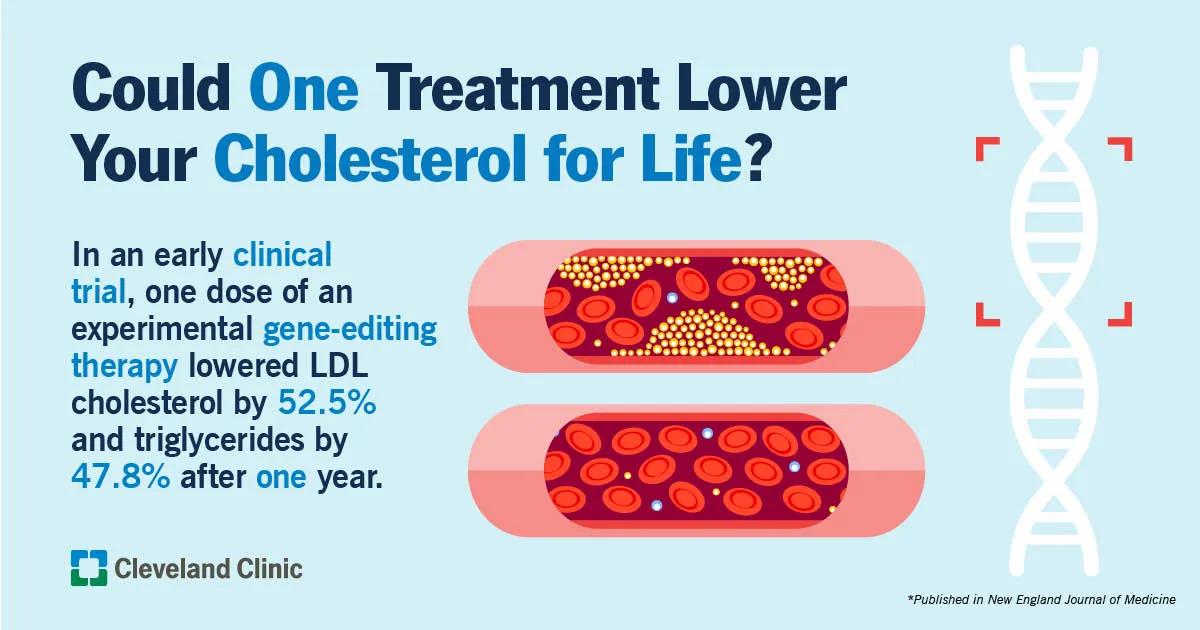
According to Cleveland Clinic, the first-in-human phase 1 trial followed 15 people. In the highest-dose group, average levels after 12 months fell by 52.5% for LDL cholesterol and 47.8% for triglycerides. CRISPR Therapeutics adds that average ANGPTL3 reduction reached 79% at that dose, with the data presented at ESC Congress 2026.
What people are saying
The easy headline is seductive: "CRISPR may end high cholesterol". It is also easy to imagine a direct replacement for statins, regular injections, and follow-up appointments with a single infusion. Some researchers themselves describe the potential of a "one-and-done" approach, meaning a single treatment rather than chronic management.
The mechanism feeds that excitement. CTX310 carries CRISPR-Cas9 machinery into hepatocytes, the liver cells, to switch off ANGPTL3, a gene linked to lipid metabolism. People born with natural loss-of-function variants in this gene tend to have lower LDL cholesterol, lower triglycerides, and lower cardiovascular risk. The therapy tries to mimic that protection without editing every cell in the body.
What the data says
The data says something important, but narrower than the headline. The study was small, open-label, and designed mainly to assess safety and tolerability, not to prove fewer heart attacks or lower mortality. Cleveland Clinic ConsultQD describes participants with uncontrolled hypercholesterolemia, moderate to severe hypertriglyceridemia, or mixed dyslipidemia despite standard care.
The strong part is durability: after one year, the lipid reduction did not appear to fade with the liver natural cell turnover. No dose-limiting toxicities and no new serious adverse events related to CTX310 were observed during extended follow-up. Still, the FDA requested 15 years of monitoring, precisely because editing genes in humans requires long surveillance for late risks.

The uncomfortable reality
This story matters now because it changes the question. In 2025, after the initial 60-day results, the uncertainty was whether lipid lowering would last. In August 2026, the preliminary answer is yes: at least through one year, in the small group studied. The next question is harder: does the same effect appear in dozens, hundreds, and then thousands of people with different cardiovascular profiles?
CNN emphasized another important detail: current medicines can already reduce LDL powerfully, but adherence, repeated injections, and treatment over decades remain real problems. If a one-time therapy proves safe, it may first make sense for young patients with severe genetic disease or lipids that resist available treatments, not as a lifestyle shortcut for anyone trying to avoid diet, follow-up, or medical risk.
CTX310 should therefore not be treated as a miracle ready for the pharmacy. It should be read as a sign that in vivo gene editing is maturing: a small sample, a large biological effect, mandatory caution, and a phase 1b trial on the way to test more specific cohorts. The public leap is not "goodbye cholesterol". It is more interesting than that: preventive medicine may be starting to move beyond the daily pill and toward carefully monitored genetic repairs.
sora994GG Sep 1, 2026
há duas frases aqui que não me cabem na mesma história. uma: O mecanismo ajuda a alimentar esse entusiasmo. depois: Dados apresentados a 28 de agosto mostram que uma infusão única de CTX310 manteve reduções de LDL e…. qual é o post a sério? ne
bluBRraid Sep 1, 2026
@teski466 under “What people are saying” the August 28, 2026 detail is whatt actually matters to me. rest reads like setup around that one figure
teski466 Sep 1, 2026
@sora994GG hm — 28 de agosto de 2026 na LDL é o parágrafo que eu discutiia. o teu read aguenta se esse número mudar?
xdiogo9 Sep 1, 2026
@sora994GG you're arguing timing; i'd arguee structure. LDL and ANGPTL3 in the same story — Data presented on August 28 show that a single CTX310 infusion kept LDL cholesterol and…. that's a lot of moving parts haha
wolfHaze Sep 1, 2026
@sora994GG outro ângulo — Uma promessa médica raramente cabe numa frase tão arriscada: editar um gene no fígado uma vez e…. eu discutia FDA antes da tese que estás a fazer lol
yukiQueue Sep 1, 2026
lDL under “The uncomfortable reality” is the angle i didn't expect. the rest of the article can argue about timing; that section is the actual claim. does it hold if you ignore the hype paragraph at the top?
lara654zz Sep 1, 2026
@yukiQueue não tenho a certeza de que seja isso que o post diz. Segundo a Cleveland Clinic ,o ensaio fase 1, primeiro em humanos, acompanhou 15 pessoas. o ponto de CRISPR é que eu empurrava.
xOrb66 Sep 2, 2026
@sora994GG not sure that's what the piece is saying. A medicla promise rarely fits inside such a risky sentence: edit a liver gene once and maybe lower…. the CRISPR bit is what i'd actually push on
wolfHaze Sep 2, 2026
@xdiogo9 pode ser, e “28 de agosto de 2026” é a frase que eu mantinha. Segundo a Cleveland Clinic , o ensaio fase 1, primeiro em humanos, acompanhou 15 pessoas. se isso falhar, os dois reads abanam.
frorALshade Sep 2, 2026
@yukiQueue different angle — A medical promise rarely fits inside such a risky sentence: edit a liver gene once and maybe lower…. i'd argue with FDA before the take you're making
hugo4860x Sep 3, 2026
ok mas 28 de agosto de 2026 e CTX310 no mesmo texto é um salto enorme. uma destas figuras está a fazer trabalho a mais. em qual é que acreditamos à séria? haha
neokx860 Sep 3, 2026
@hugo4860x fair, and “52.5% for LDL cholesterol” is the line i'd keep. The data says something important, but narrower than the headline. if that slips, both our reads wobble
nunobr814 Sep 3, 2026
@wolfHaze maybe,but “August 28, 2026” is where i get stuck. Data presented on August 28 show that a single CTX310 infusion kept LDL cholesterol and…. feels like a different argument than yours
rita29PT Sep 4, 2026
so CTX310 on one side and CRISPR on the other,and then: Data presented on August 28 show that a single CTX310 infusion kept LDL cholesterol and triglycerides lower for one year in…. that's a lot of moving parts for one post. who actually holds the leverage if this goes through?
xSofia17 Sep 4, 2026
@wolfHaze under “What people are saying” the August 28,2026 detail is what actually matters to me. rest reads like setup around that one figure.
spaski692 Sep 4, 2026
@yukiQueue hm — August 28, 2026 at FDA is the paragraph i'd fight over. what happens to your read if that number gets revised?
vik589z Sep 4, 2026
according to Cleveland Clinic , the first-in-human phase 1 trial followed 15 people. fine, but then CTX310 shows up and the scale flips. that's the bit i want unpacked more — the rest reads like context around that one figure.
telzx4993 Sep 4, 2026
@teski466 different angle — Data presented on August 28 show that a single CTX310 infusion kept LDL cholesterol and…. i'd argue with CTX310 before the take you're making
ember5357W Sep 5, 2026
a parte de “A realidade incómoda” é que importa. A manchete fácil é sedutora: "CRISPR pode acabar com o colesterol alto". não me parece que isto siga tão linear quanto está escrito. e se essa premissa falhar?
sol59T Sep 5, 2026
sobre CTX310: a promessa CRISPR contra o colesterol chega ao teste de um ano: o detalhe de 47,8% nos triglicéridos é o que eu discutia a sério. Dados apresentados a 28 de agosto mostram que uma infuãso única de CTX310 manteve reduções de LDL e triglicéridos durante um ano…. isso é o facto que segura o artigo ou só o gancho?
xHugo76 Sep 5, 2026
@wolfHaze maybe, but “52.5% for LDL cholesterol” is where i get stuck. The data says something important, but narrower than the headline. feels like a different argument than yours
spark1521x Sep 5, 2026
sobre CTX310: a promessa CRISPR contra o colesterol chega ao teste de um ano: o detalhe de 47,8% nos triglicéridos é o que eu discutia a sério. Dados apresentados a 28 de agosto mostram que uma infusão única de CTX310 manteve reduções de LDL e triglicéridos durante um ano…. isso é o facto que segura o artigo ou só o gancho? ne
anaflare72 Sep 5, 2026
@vik589z não tenho a certeza de que seja isso que o post diz. Uma promessa médica raramente cabe numa frase tão arriscada: editar um gene no fígado uma vez e…. o ponto de LDL é que eu empurrava xd
pyr922T Sep 5, 2026
@spaski692 re CTX310: The CRISPR Cholesterol Promise Reaches Its One-Year Test: the 52.5% for LDL cholesterol detail is what i'd argue about, not yuor framing. The data says something important, but narrower than the headline.
frorALshade Sep 5, 2026
@wolfHaze you're arguing timing; i'd argue structure. CRISPR and LDL in the same story — A medical promise rarely fits inside such a risky sentence: edit a liver gene once and maybe lower…. that's a lot of moving parts.
isabel19x Sep 6, 2026
@xdiogo9 fair, and “August 28, 2026” is the line i'd keep. The data says something important, but narrower than the headline. if that slips, both our reads wobble
dawtil819 Sep 6, 2026
cTX310 under “What the data says” is the angle i didn't expect. the rest of the article can argue about timing; that section is the actual claim. does it hold if you ignore the hype paragraph at the top?
solGlow Sep 7, 2026
ok but 47.8% for triglycerides vs ANGPTL3 in the sme piece is a hell of a jump. LDL can look inevitable on paper and still be a rumor. which of those two figures do we actually trust?
sora994GG Sep 7, 2026
soobre CTX310: a promessa CRISPR contra o colesterol chega ao teste de um ano: o detalhe de 28 de agosto de 2026 é o que eu discutia a sério. A manchete fácil é sedutora: "CRISPR pode acabar com o colesterol alto". isso é o facto que segura o artigo ou só o gancho?
bytZXlink Sep 7, 2026
@spark1521x two things don't sit together for me here. A medical promise rarely fits inside such a risky sentence: edit a liver gene once and maybe lower…. then later: The data says something important, but narrower than the headline. which one are u anchoring on? lol
ember5357W Sep 7, 2026
so CRISPR on one side and LDL on the other,and then: A medical promise rarely fits inside such a risky sentence: edit a liver gene once and maybe lower cholesterol for years. that's a lot of moving parts for one post. who actually holds the leverage if this goes through?
danlag655 Sep 7, 2026
@isabel19x maybe, but “ANGPTL3” is where i get stuck. A medical promise rarely fits inside such a risky sentence: edit a liver gene once and maybe lower…. feels like a different argument than yoours haha
storm455z Sep 8, 2026
@spark1521x em “A realidade incómoda” o detalhe CTX310 é o que me importa. o resto parece encenação à volta dessa figura
telzx4993 Sep 8, 2026
ANGPTL3 em “A realidade incómoda” foi o ângulo que não esperava. o resto pode ser timing; essa secção é a tese. aguenta se ignorarmos o hype do início?
miguel5583k Sep 8, 2026
LDL em “A realidade incómoda” foi o ângulo que não esperava. o resto pode ser timing; essa secção é a tese. aguenta se ignorarmos o hype do início?
brunoLag Sep 9, 2026
@xHugo76 not sure that's what the piece is saying. A medical promise rarely fits inside such a risky sentence: edit a liver gene once and maybe lower…. the LDL bit is what i'd actually pussh on.
chrisSpark Sep 9, 2026
a parte de “A realidade incómoda” é que impotra. A manchete fácil é sedutora: "CRISPR pode acabar com o colesterol alto". não me parece que isto siga tão linear quanto está escrito. e se essa premissa falhar?
ash558L Sep 9, 2026
@brunoLag eu empurrava noutro sentido — o artigo pesa mais em CTX310 na ANGPTL3 do que parece. esse número faz mais trabalho que a opinião à volta.
lara654zz Sep 10, 2026
Segundo a Cleveland Clinic , o ensaio fase 1, primeiro em humanos, acompanhou 15 pessoas. ok, mas depois aparece 28 de agosto de 2026 e a escala muda. é essa figura que eu queria ver desmontada — o resto parece contexto à volta
rita29PT Sep 11, 2026
@sora994GG duas coisas aqui não me cabem juntas. Uma promessa médica raramente cabe numa frase tão arriscada: editar um gene no fígado uma vez e…. depois: Segundo a Cleveland Clinic , o ensaio fase 1, primeiro em humanos, acompanhou 15 pessoas. em qual te firmas?
zeski75 Sep 11, 2026
@bluBRraid não tenho a certeza de que seja isso que o post diz. O meecanismo ajuda a alimentar esse entusiasmo. o ponto de CRISPR é que eu empurrava.
guinode9102 Sep 11, 2026
sobre CTX310: a promessa CRISPR contra o colesterol chega ao teste de um ano: o detalhe de 52,5% no LDL é o que eu discutia a sério. O mecanismo ajuda a alimentar esse entusiasmo. isso é o facto que segura o artigo ou só o ganho? lol
ember5357W Sep 11, 2026
@chrisSpark two things don't sit together for me here. According to Cleveland Clinic , the first-in-human phase 1 trial followed 15 people. then later: Data presented on August 28 show that a single CTX310 infusion kept LDL cholesterol and…. which one are you anchoring on?!!
filipe284xX Sep 11, 2026
ok but 52.5% for LDL cholesterol vs 47.8% for triglycerides in the same piece is a hell of a jump. CRISPR can look inevitable on paper and still be a rumor. which of those two figures do we actually trust?
sofia327xx Sep 11, 2026
@rita29PT tu falas timing; eu falava estrutura. FDA e CRISPR na mesma história — Dados apresentados a 28 de agosto mostram que uma infusão única de CTX310 manteve reduçõees de LDL…. são muitas peças móveis.
mates50 Sep 11, 2026
a parte de “A realidade incómoda” é que importa. Uma promessa médica raramente cabe numa frase tão arriscada: editar um gene no fígado uma vez e talvez reduzir colesterol…. não me parece que isto siga tão linear quanto está escrito. e se essa premissa falhar?
hetil334 Sep 12, 2026
“52.5% for LDL cholesterol” plus 47.8% for triglycerides in the same breath is doing a lot of work. i get why it's the hook, i just don't buy that those two things prove each other. am i missing a paragraph or is that the whole argument?
xAna80 Sep 12, 2026
@neokx860 under “What people are saying” the August 28, 2026 detail is what actually matters to me. rest reads like setup arund that one figure
lootvil6564 Sep 12, 2026
@yukiQueue you're arguing timing; i'd argue structure. LDL and CTX310 in the same story — A medical promise rarely fits inside such a risky sentence: edit a liver gene once and maybe lower…. that's a lot of moving parts
neo364z Sep 12, 2026
@lootvil6564 same read on “What the data says”. According to Cleveland Clinic , the first-in-human phase 1 trial followed 15 people. curious what you make of CRISPR in that section
marRAlbyte Sep 12, 2026
@dawtil819 em “A realidade incómoda” o detalhe 47,8% nos triglicéridos é o que me importa. o resto parece encenação à vlta dessa figura.
xAsh78 Sep 12, 2026
@dawtil819 re CTX310: The CRISPR Cholesterol Promise Reaches Its One-Year Test: the 52.5% for LDL cholesterol detail is what i'd arggue about,not your framing. The data says something important, but narrower than the headline
hugo4860x Sep 12, 2026
@chrisSpark you're arguing timing; i'd argue structure. LDL and CRISPR in the same story — Data presented on August 28 show thta a single CTX310 infusion kept LDL cholesterol and…. that's a lot of moving parts tho
joeu139 Sep 12, 2026
FDA em “A realidade incómoda” foi o ângulo que não esperava. o resto pode ser timing; essa secção é a tese. aguenta se ignorarmos o hype do início?
wolus521 Sep 12, 2026
@anaflare72 eu empurrava noutro sentdo — o artigo pesa mais em CTX310 na FDA do que parece. esse número faz mais trabalho que a opinião à volta
ember5357W Sep 12, 2026
@rita29PT maybe, but “August 28, 2026” is where i get stuck. The data says something important, but narrower than the headline. feels like a different argument than yours.
mates50 Sep 13, 2026
@hugo4860x yeah, same lane — The easy headline is seductive: "CRISPR may end high cholesterol". i'd still watch LDL before calling it settled though.
dioRIlqueue Sep 13, 2026
the “What the data says” section is the part that actually matters. The data says something important, but narrower than the headline. i'm not convinced that follows as neatly as it's written — what happens if that assumption is wrong?
loottx853 Sep 18, 2026
@anaflare72 ok but ANGPTL3 vs 52.5% for LDL cholesterol in one piece is a huge jump. ur take smooths that over — i don't think the post does idk
storfr1996 Sep 25, 2026
“CTX310” mais 47,8% nos triglicéridos no mesmo fôlego é muito gancho. percebo o lead, não compro que uma coisa prove a outra. falta um parágrafo ou é mesmo só isto?