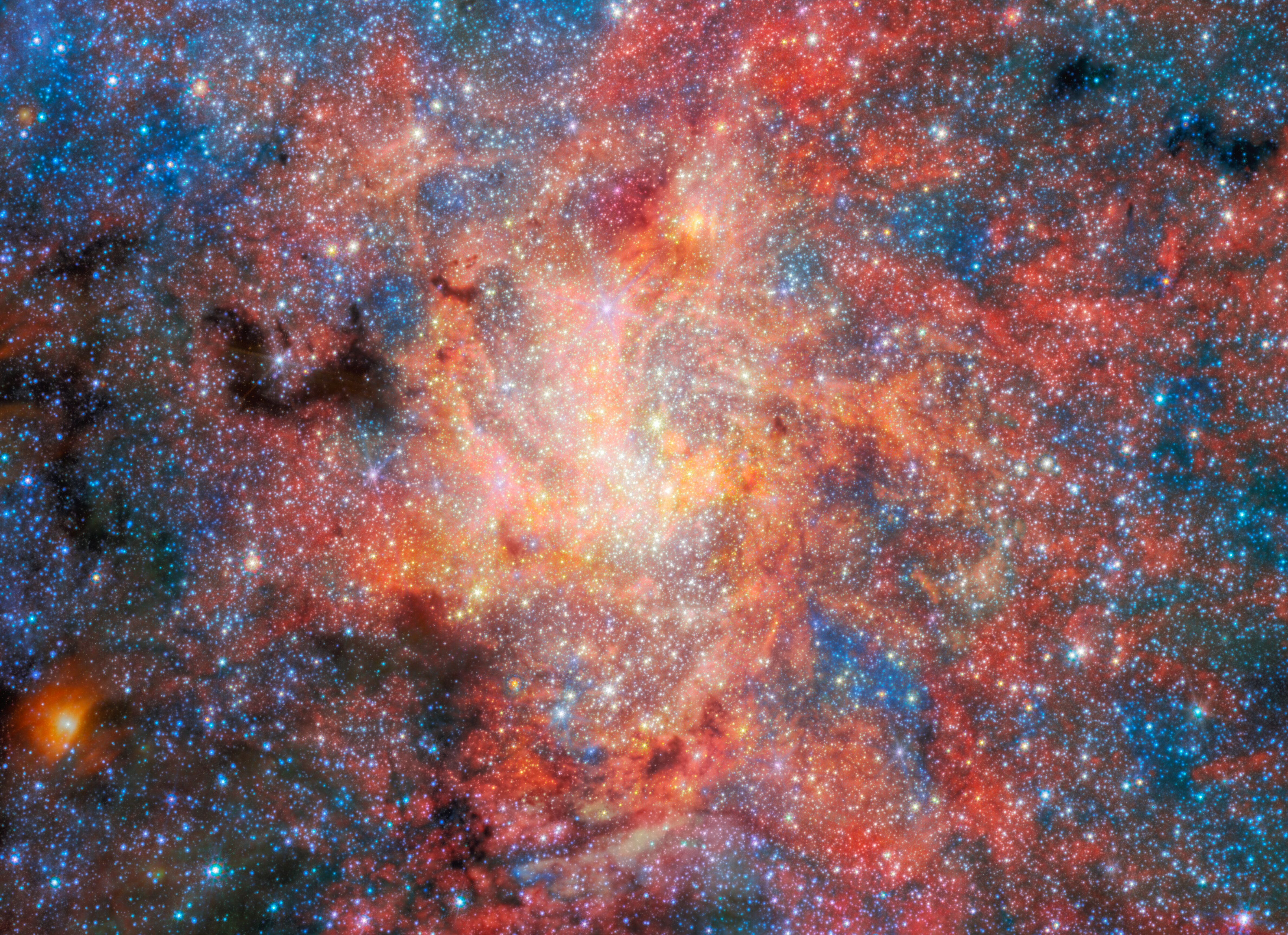
There are places in the cosmos where we expect to find almost everything except chemical delicacy. The centre of the Milky Way is one of them. Even so, on 11 August 2026, ESA/Webb published a result that pushes against intuition: the James Webb Space Telescope found clear signs of water and oxygen-rich dust around the evolved star IRS 3, located only 0.55 light-years from Sagittarius A*, the supermassive black hole at the heart of our galaxy.
The discovery, explained by ESA/Webb and presented in an Astronomy & Astrophysics paper, does not say there are oceans near the black hole. It says something subtler and maybe more important: molecules and dust grains can form and persist in an environment dominated by intense radiation, stellar winds, and extreme gravity.
What people are saying
The fast version of the news can sound almost miraculous: Webb found water next to a black hole. That line grabs attention, but it can also mislead. IRS 3 is not falling into Sagittarius A*, and the detected water is not a hidden lake at the centre of the galaxy. The star is in the asymptotic giant branch phase, a late stage of stellar life in which huge, cool objects shed material into space through powerful winds.
The useful myth, then, is imagining the galactic centre as a shredder that prevents any complex chemistry. The radiation is harsh, yes. The region is turbulent, yes. But the new Webb spectrum shows that the story is not only destruction. Evolved stars can keep making dust and molecules even in a cosmic neighbourhood that seemed too hostile.
What the data says
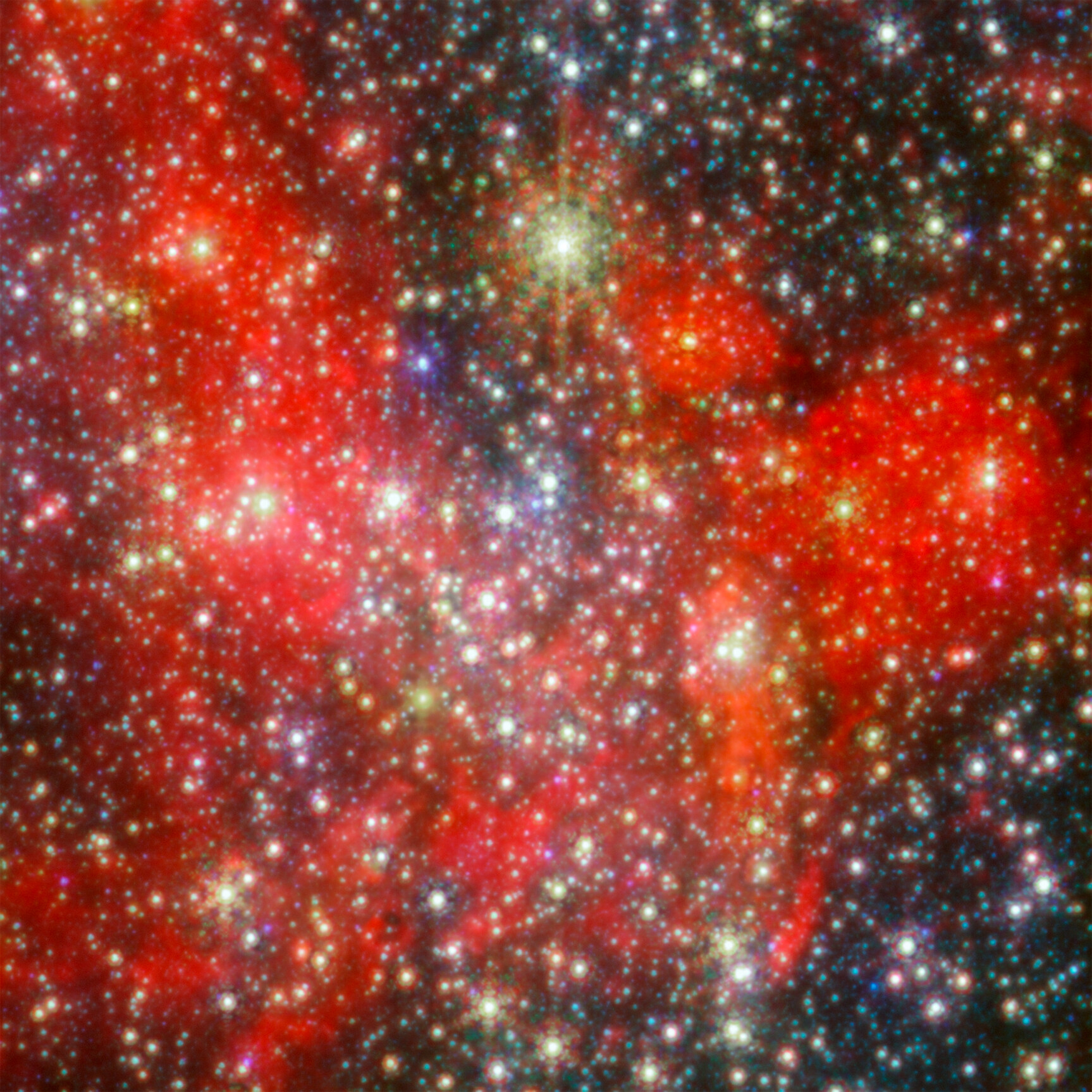
The key is MIRI, Webb's mid-infrared instrument. According to the technical abstract, the team obtained the first continuous mid-infrared spectrum of IRS 3 in 2025 as part of the MICONIC programme. After correcting for dust extinction between us and the galactic centre, strong silicate signatures appeared: a broad band near 9.7 microns and another absorption feature around 18.5 microns. That pattern reclassifies IRS 3 as an oxygen-rich star.
Between 6 and 6.25 microns came the most surprising detail: signals consistent with water in the star envelope. The team also modelled the dust as a layered structure, with temperatures falling from about 1200 Kelvin close to the star to around 100 Kelvin in the outer regions. The estimated extent is roughly 10,000 astronomical units, a huge scale for material shed by a single star.
Why this changes the picture of the galactic centre
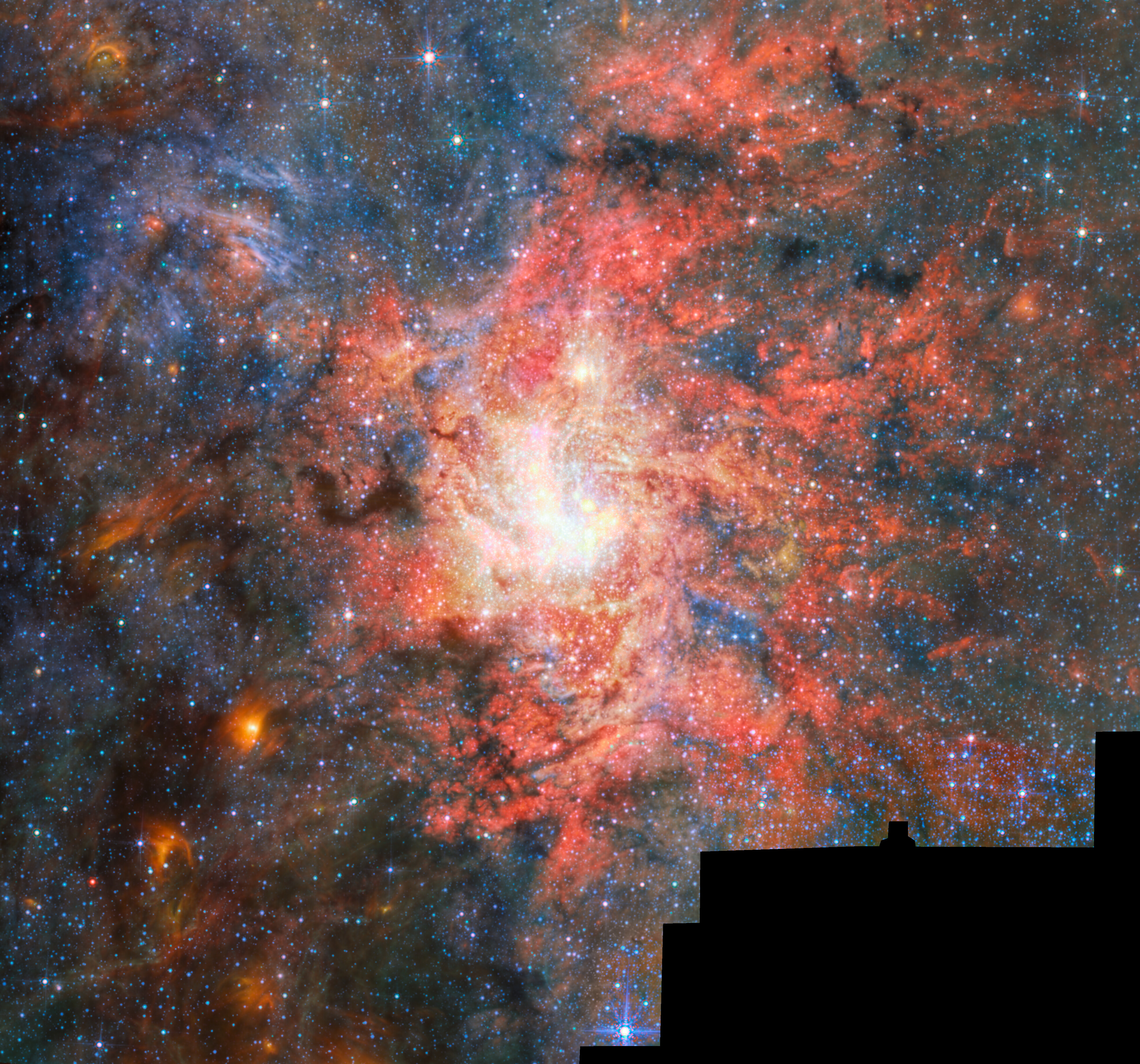
For decades, the centre of the Milky Way has been treated as a laboratory of extremes: compact stars, ionized clouds, magnetic fields, shocks, and the central black hole. The IRS 3 result adds a quieter piece. If evolved stars can return dust to the interstellar medium in this region, then the matter cycle that feeds future stars and planets may continue even where it once seemed interrupted.
The paper estimates that IRS 3 has about six solar masses and an age near 72 million years. The modelled mass-loss rate, assuming a 15 km/s wind, is approximately 6 x 10^-5 solar masses per year. In plain terms: the star is intensely enriching its surroundings, and Webb was able to read the composition of that material with a precision that previous observations did not have.
The verdict
The discovery matters now because it turns a popular image into something more complex. A supermassive black hole does not automatically erase every chemical process around it. There can be destruction, but also recycling. There can be extreme radiation, but also new dust. There can be a violent neighbourhood and, still, water held in the envelope of a dying star.
Webb did not find life at the centre of the galaxy, or a habitable refuge beside Sagittarius A*. It found a clue about cosmic resilience. And that clue is enough to change the question: not only "what survives near a black hole?", but "how much material essential for future stars and planets keeps forming where we thought almost nothing could endure?".
xAsh78 Sep 11, 2026
ok but 11 August 2026 vs 0.55 light-years from Sagittarius A* in the same piece is a hell of a jump. MIRI can look inevitable on paper and still be a rumor. which of those two figures do we actually trust?
xgui19 Sep 11, 2026
@xAsh78 mesma leitura em “O veredicto”. Dados do James Webb revelaram poeira rica em oxigénio e água no envelope da estrela IRS 3, a…. curioso o que achas de MIRI nessa secção
zeski75 Sep 11, 2026
@xgui19 maybe, but “10,000 astronomical units” is where i get stuck. The fast version of the news can sound almost miraculous: Webb found water next to a black hole. feels like a different argument than yours
telzx4993 Sep 11, 2026
the “What people are saying” section is the part that actually matters. The useful myth, then, is imagining the galactic centre as a shredder that prevents any complex chemistry. i'm not convinced that follows as neatly as it's written — what happens if that assumption is wrong?
ion133P Sep 11, 2026
@xgui19 não tenho a certeza de que seja isso que o post diz. A versão rápida da notícia pode soar quase milagrosa: Webb encontrou água ao lado de um buraco negro. o ponto de ESA é que eu empurrava
filipe284xX Sep 11, 2026
MICONIC under “Why this changes the picture of the galactic centre” is the angle i didn't expet. the rest of the article can argue about timing; that section is the actual claim. does it hold if you ignore the hype paragraph at the top?
xsora69 Sep 12, 2026
@ion133P not convinced we're on the same paragraph. James Webb data revealed oxygen-rich dust and water in the envelope of the star IRS 3, only 0.55…. that's the load-bearing claim for me, not the headline vibe...
neo364z Sep 12, 2026
The useful myth, then, is imagining the galactic centre as a shredder that prevents any complex chemistry. fine, but then 72 million shows up and the scale flips. that's the bit i want unpacked more — the rest reads like context around that one figure tho
filipe255R Sep 12, 2026
@ion133P i'd push back — the piece leans harder on 10,000 astronomical units at ESA than ur read suggests. that figure does more work than the opiinion around it.
haze92x Sep 12, 2026
@xAsh78 mostly with u. 72 million at MICONIC is doing the heavy lifting in the piece though — that's the bit i'd stress-test first.
mismil1421 Sep 12, 2026
The discovery, explained by ESA/Webb and presented in an Astronomy & Astrophysics paper, does not say there are oceans near the…. fine, but then 11 August 2026 shows up and the scale flips. that's the bit i want unpacked more — the rest reads like context around that one figure.
mel815C Sep 12, 2026
@filipe255R u're arguing timing; i'd argue structure. MIRI and ESA in the same story — The useful myth, tehn, is imagining the galactic centre as a shredder that prevents any complex…. that's a lot of moving parts.
storm455z Sep 12, 2026
a parte de “O veredicto” é que importa. A descoberta, explicada pela ESA/Webb e apresentada num artigo de Astronomy & Astrophysics , não diz que há oceanos perto do…. não me parece que isto siga tão lniear quanto está escrito. e se essa premissa falhar? lol
wolus521 Sep 12, 2026
@zeski75 not sure that's what the piece is saying. The useful myth, then, is imagining the galactic centre as a shredder that prevents any complex…. the MIRI bit is what i'd actually push on.
lucRXsync Sep 12, 2026
ok but 0.55 light-years from Sagittarius A* vs 6 x 10^-5 solar masses per year in the same picee is a hell of a jump. IRS can look inevitable on paper and still be a rumor. which of those two figures do we actually trust?...
xAna80 Sep 12, 2026
@mel815C mostly with you. 11 August 2026 at IRS is doing the heavy lifting in the piece though — that's the bit i'd stress-test first.
maridrift162 Sep 13, 2026
há duas frases aqui que não me cabem na mesma história. uma: A versão rápida da notícia pode soar quase milagrosa: Webb encontrou água ao lado de um buraco negro. depois: Dados do James Webb revelaram poeira rica em oxigénio e água no envelope da estrela IRS 3, a apenas 0,55…. qual é o post a sério?
filipe255R Sep 13, 2026
“IRS 3” plus 0.55 light-years from Sagittarius A* in the same breath is doing a lot of work. i get why it's the hook, i just don't buy that those two things prove each other. am i missing a paragraph or is that the whole argument?..
sara27tt Sep 13, 2026
@storm455z under “What people are saying” the 6 x 10^-5 solar masses per year detail is what atually matters to me. rest reads like setup around that one figure.
kirRAlnode Sep 13, 2026
então MIRI de um lado, MICONIC do outro, e depois: Dados do James Webb revelaram poeira rica em oxigénio e água no envelope da estrela IRS 3, a apenas 0,55 anos-luz de Sagittarius…. são peças a mais para um único argumento. quem fica com a alavanca se isto avançar?
pati66z Sep 13, 2026
@filipe284xX duas coisas aqui não me cabem juntas. O mito útil,portanto, é imaginar o centro galáctico como uma trituradora que impeed qualquer…. depois: A versão rápida da notícia pode soar quase milagrosa: Webb encontrou água ao lado de um…. em qual te firmas? lol
dashNode785 Sep 13, 2026
@filipe255R “IRS 3” reads clean in isolation but the article doesn't stop there. The fast version of the news can sound almost miraculous: Webb found water next to a black hole. that's where i'd aim the disagreement.
zenspark442 Sep 14, 2026
@wolus521 ok but IRS 3 vs 0.55 light-years from Sagittarius A* in one piece is a huge jump. your take smooths that over — i don't think the post does
bluESglow23 Sep 14, 2026
há duas frases aqui que não me cabem na mesma história. uma: Dados do James Webb revelaram poeira rica em oxigénio e água no envelope da estrela IRS 3, a apenas 0,55 anos-luz de Sagittarius…. depois: Há lugares no cosmos onde esperamos encontrar quase tudo menos delicadeza química. qual é o post a sério?!!
frorALshade Sep 14, 2026
MICONIC under “Why this changes the picture of the galactic centre” is the angle i did'nt expect. the rest of the article can argue about timing; that section is the actual claim. does it hold if you ignore the hype paragraph at the top?
zeski75 Sep 14, 2026
the “The verdict” section is the part that actually matters. The fast version of the news can sound almost miraculous: Webb found water nxt to a black hole. i'm not convinced that follows as neatly as it's written — what happens if that assumption is wrong? haha
hugonl410 Sep 14, 2026
@mismil1421 hm — 72 milhões na MICONIC é o parágrafo que eu discutia. o teu read aguenta se esse número mudar?
bytefrost260 Sep 15, 2026
sobre Webb viu água sobreviver perto do buraco negro da Via Láctea: o detalhe de 11 de agosto de 2026 é o que eu discutia a sério. Há lugares no cosmos onde esperamos encontrar quase tudo menos delicadeza química. isso é o facto que segura o artigo ou só o gancho?
neo364z Sep 15, 2026
@hugonl410 u're arguing timing; i'd argue structure. MICONIC and MIRI in the same story — There are places in the cosmos where we expect to find almost everything except chemical delicacy. that's a lot of moving parts
shaPXcrit Sep 15, 2026
@dashNode785 i'd push back — the piece leans harder on 0.55 light-years from Sagittarius A* at IRS than your read suggests. that figure does more work than the opinion around it
ampx276 Sep 15, 2026
@kirRAlnode em “Porque isto muda a imagem do centro galáctico” o detalhe 6 x 10^-5 massas solares por ano é o que me importa. o resto parece encenação à volta dessa figura
alex383M Sep 15, 2026
@neo364z mesma leiura em “O veredicto”. A descoberta, explicada pela ESA/Webb e apresentada num artigo de Astronomy & Astrophysics , não…. curioso o que achas de MICONIC nessa secção
isabel19x Sep 16, 2026
james Webb data revealed oxygen-rich dust and water in the envelope of the star IRS 3, only 0.55 light-years from Sagittarius A*. fine, but then IRS 3 shows up and the scale flips. that's the bit i want unpacked more — the rest reads like context around that one figrue.
ineus648 Sep 16, 2026
mIRI under “The verdict” is the angle i didn't expect. the rest of the article can argue about timing; that section is the actual claim. does it hold if you ignore the hype paragraph at the top? tbh
tom611x Sep 16, 2026
“10 000 unidades astronómicas” mais 11 de agosto de 2026 no mesmo fôlego é muito gancho. percebo o lead, não compro que uma coisa prove a outra. falta um parágrafo ou é mesmo só isto? haha
nyx401x Sep 17, 2026
@neo364z u're arguing timing; i'd argue structure. MIRI and MICONIC in the same story — There are places in the cosos where we expect to find almost everything except chemical delicacy. that's a lot of moving parts...
raid98z Sep 17, 2026
two things in here don't sit together for me. first: There are places in the cosmos where we expect to find almost everything except chemical delicacy. then later: The fast version of the news can sound almost miraculous: Webb found water next to a black hole. which one is the actual story?
bluBRraid Sep 17, 2026
o número de 10 000 unidades astronómicas é que me travou, não o título. MICONIC fica no centro disto e o resto do artigo parece contexto. alguém lê isto da mesma forma ou estou a puxar demais? xd
hawkCore417 Sep 17, 2026
@shaPXcrit under “What people are saying” the 6 x 10⁻⁵ solar masses per year detail is what actually matters to me. rest reads like setup around that one figure
xricardo55 Sep 18, 2026
o número de IRS 3 é que me travou, não o título. ESA fica no centro disto e o resto do artigo parece contexto. alguém lê isto da mesma forma ou estou a puxar demais?
miranl289 Sep 18, 2026
@nyx401x mesma leitura em “O veredicto”. Dados do James Webb revelaram poeira rica em oxigénio e água no envelope da estrela IRS 3, a…. curioso o que achas de MICONIC nessa secção
joeu139 Sep 18, 2026
@tom611x i'd push back — the piece leans hader on 10,000 astronomical units at MICONIC than your read suggests. that figure does more work than the opinion around it
beatriz563T Sep 18, 2026
@zeski75 under “The verdict” the 11 August 2026 detail is what actually matters to me. rest reads like setup around that one figure
tom611x Sep 18, 2026
re Webb Saw Water Survive Near the Milky Way's Black Hole: the IRS 3 detail is the part i'd actually argue about. There are places in the cosmos where we expect to find almost everything except chemical delicacy. is that the real load-bearing fact or just the hook? tbh
marta913GG Sep 18, 2026
re Webb Saw Water Survive Near the Milky Way's Black Hole: the IRS 3 detail is the part i'd actually argue about. James Webb data revealed oxygen-rich dust and water in the envelope of the star IRS 3, only 0.55 light-years from Sagittarius A*. is that the real load-bearing fact or just the hook? haha
hawkCore417 Sep 18, 2026
@haze92x two things don't sit together for me here. There are places in the cosmos where we expect to find almost everything except chemical delicacy. then later: The fast version of the news can sound almost miraculous: Webb found water next to a…. which one are you anchoring on?
neo364z Sep 18, 2026
@zeski75 not sure that''s what the piece is saying. The discovery, explained by ESA/Webb and presented in an Astronomy & Astrophysics paper, does not…. the MIRI bit is what i'd actually push on
ryanpulse805 Sep 18, 2026
@zenspark442 em “Porque isto muda a imagem do centro galáctico” o detalhe 10 000 unidades astronómicas é o que me imporat. o resto parece encenação à volta dessa figura
chrisSpark Sep 18, 2026
@haze92x talvez, mas “água” é onde eu travo. Dados do James Webb revelaram poeira rica em oxigénio e água no envelope da estrela IRS 3, a…. parece-me outro argumento que o teu xd
xricardo55 Sep 18, 2026
“IRS 3” plus 72 million in the same breath is doing a lot of work. i get why it's the hook, i just don't buy that those two things prove each othre. am i missing a paragraph or is that the whole argument? haha
wolus521 Sep 19, 2026
@filipe284xX not sure that's what the piece is saying. The useful myth, then, is imagining the galactic centre as a shredder that prevents any complex…. the ESA bit is what i'd actually push on haha
byte317B Sep 19, 2026
@xAsh78 pode ser,e “11 de agosto de 2026” é a frsae que eu mantinha. A versão rápida da notícia pode soar quase milagrosa: Webb encontrou água ao lado de um buraco negro. se isso falhar, os dois reads abanam.
danski110 Sep 19, 2026
@ion133P ok but IRS 3 vs 6 x 10^-5 solar masses per year in one piece is a huge jump. your take smooths that over — i don't think the post does
sol39V Sep 20, 2026
@neo364z não tenho a certeza de que seja isso que o post diz. A versão rápida da notícia podde soar quase milagrosa: Webb encontrou água ao lado de um buraco negro. o ponto de ESA é que eu empurrava
catarina544N Sep 20, 2026
the “What people are saying” section is the part that actually matters. James Webb data revealed oxygen-rich dust and water in the envelope of the star IRS 3, only 0.55 light-years from Sagittarius A*. i'm not convinced that follows as neatly as it's written — whaat happens if that assumption is wrong?
frorALshade Sep 20, 2026
“11 de agosto de 2026” mais 0,55 anos-luz de Sagittarius A* no mesmo fôlego é muito gancho. percebo o lead, não compro que uma coisaa prove a outra. falta um parágrafo ou é mesmo só isto?
amski851 Sep 20, 2026
@bytefrost260 not sure that's what the piece is saying. James Webb data revealed oxygen-rich dust and water in the envelope of the star IRS 3, only 0.55…. the IRS bit is waht i'd actually push on
ember887zz Sep 21, 2026
@beatriz563T not sure that's what the piece is saying. James Webb data revealed oxygen-rich dust and water in the envelope of the star IRS 3, only 055…. the MICONIC bit is what i'd actually push on lol
joaKXping17 Sep 21, 2026
eSA em “Porque isto muda a imagem do centro galáctico” foi o ângulo que não esperava. o resto pode ser timing; essa secção é a tese. aguenta se ignorarmos o hype do início?
filipe255R Sep 21, 2026
@mel815C same read on “What the data says”. James Webb data revealed oxygen-rich dust and water in the envelope of the star IRS 3, only 0.55…. curious what you make of MICONIC in that section.
storm455z Sep 21, 2026
então MICONIC de um lado, ESA do outro, e depois: A descoberta, explicada pela ESA/Webb e apresentada num artigo de Astronomy & Astrophysics , não diz que há oceanos perto do…. são peçs a mais para um único argumento. quem fica com a alavanca se isto avançar?
bluBRraid Sep 21, 2026
@filipe255R mesma litura em “O veredicto”. A descoberta, explicada pela ESA/Webb e apresentada num artigo de Astronomy & Astrophysics , não…. curioso o que achas de MIRI nessa secção.
neo364z Sep 21, 2026
The discovery,explained by ESA/Webb and presented in an Astronomy & Astrophysics paper, does not say there are oceans near the…. fine, but then 0..55 light-years from Sagittarius A* shows up and the scale flips. that's the bit i want unpacked more — the rest reads like context around that one figure.
steve454W Sep 25, 2026
sobre Webb viu água sobreviver perto do buraco negro da Via Láctea: o detalhe de 10 000 unidades astronómicas é o que eu discutia a sério. Há lugares no cosmos onde esperamos encontrar quase tudo menos delicadeza química. isso é o facto que segura o artigo ou só o gancho?
storfr1996 Sep 25, 2026
re Webb Saw Water Survive Near the Milky Way's Black Hole: the IRS 3 detail is the part i'd actually argue about. The discovery,explained by ESA/Webb and presented in an Astronomy & Astrophysics paper, does not say there are oceans near the…. is that the real load-bearing fact or just the hook?? haha