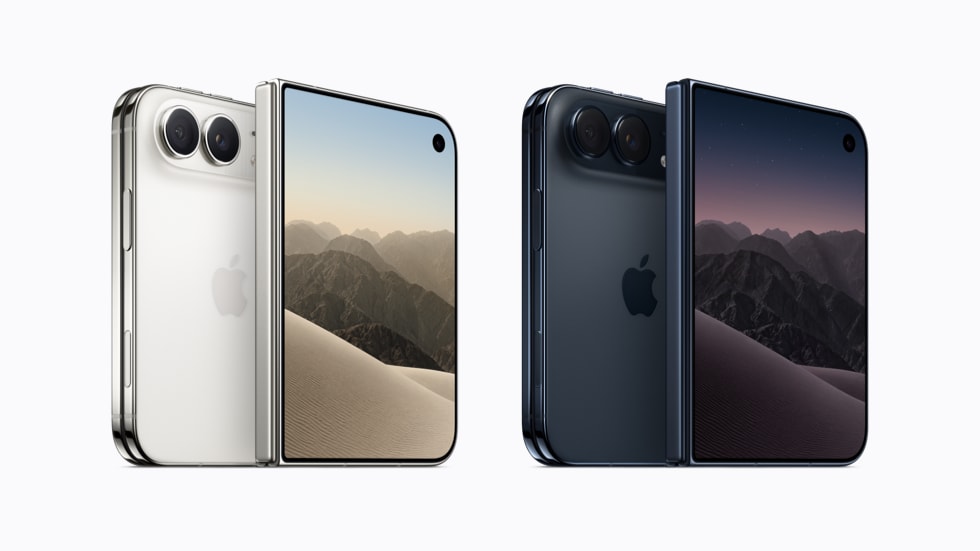
We waited so long for Apple's foldable that the question stopped being "when?" and became "who is it for?". The answer began taking shape on September 9, 2026, when the company introduced iPhone Duo, the first foldable iPhone, with pre-orders set for October 16 and availability beginning October 23. The name suggests simplicity. The price, $1,999, reminds us that this is a top-end bet, not an attempt to make the format mainstream immediately.
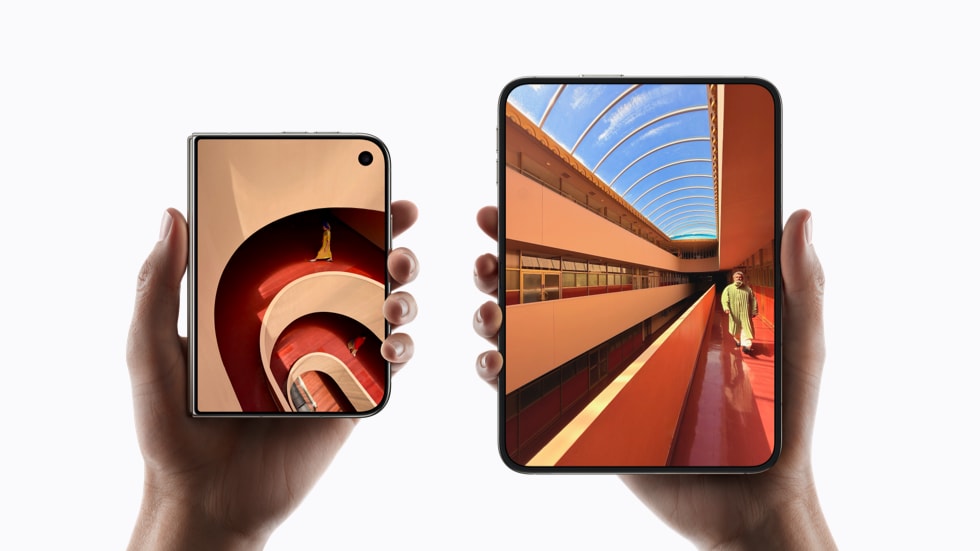
In the official announcement, Apple describes a phone that uses a 5.4-inch outer display when closed and offers a 7.6-inch inner display when open. Reuters framed the moment as Apple's late entry into a race Samsung and other Android brands have been running for years. The Verge highlighted the detail that will shape many first impressions: when open, Duo has the largest display ever put on an iPhone, but it remains expensive and thick enough not to erase the physical compromises of a foldable.
The hinge arrives late, maybe at the right time
There is an almost ironic side to this news. For years, we watched foldables promise pocket productivity, bigger entertainment, and more creative cameras, while Apple seemed to study the category from the window. That wait now gives iPhone Duo both an advantage and a burden. The advantage is entering after the format has been tested by rivals, suppliers, and users who learned what breaks, what creases, what overheats, and what nobody uses after the first week. The burden is that Apple cannot sell novelty alone; it has to sell inevitability.
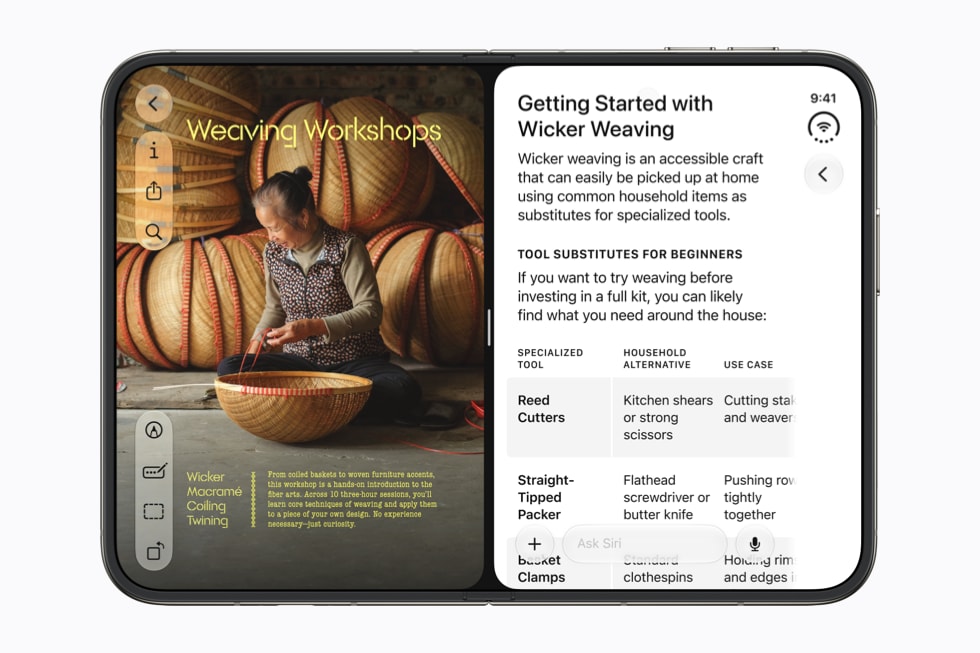
That is why the official pitch leans so hard on continuity. Both displays share the same aspect ratio, so content scales without making apps feel split in half. The A20 Pro, C2 modem, vapor chamber, and dual-battery architecture appear as guarantees that the format did not sacrifice the heart of the iPhone. iOS 27 is also presented as a central piece, adapted to new poses and orientations without turning the device into a confusing miniature tablet. We know this strategy: Apple often enters a category late and tries to make the market feel as if it only really began when the experience became polished.
The price answers before the reviews
Before we know whether the hinge ages well, whether the battery survives a difficult day, or whether apps truly use the inner panel, we already know one thing: this phone was not designed to convince everyone. At a $1,999 starting price, Duo speaks first to enthusiasts, mobile professionals, loyal ecosystem buyers, and users already tempted by the idea of folding a phone and light tablet into one pocket. The honest question is not whether the price is high. It is what kind of problem has to be solved for that price to feel rational.
Apple tries to answer with multitasking, fold-supported FaceTime, reading, video, writing with Apple Intelligence, and a camera that gains new angles when the phone can prop itself up. The problem is that many of those promises already exist, in some form, on Android foldables. What changes now is the mass of developers, accessories, retail support, services integration, and cultural pressure that comes with an iPhone. If Duo sells well, it will validate more than one product. It will validate the idea that the foldable has moved from curious niche to aspirational format inside the premium market.
The question left in the pocket
We should see iPhone Duo as a market test, not as a final verdict on every phone. Maybe the format makes sense for people living between calls, documents, messages, travel, and screens that are always too small. Maybe it remains too expensive, too delicate, or simply too large for anyone who wants a phone that disappears into a pocket. Both readings can be true at the same time, and that is exactly the interesting tension.
What changed this week was the scale of the conversation. Until now, foldables were often treated as a bet by brands that needed to prove differentiation. With Apple inside the category, every major app has to think more seriously about the screen that opens, every Android maker has to explain its advantage more clearly, and every premium buyer has one more doubt before choosing the next phone. iPhone Duo does not end the discussion. It opens it with a hinge, a high price, and a simple question: do we really want the phone to grow again, as long as it still fits in the pocket?
orbUSloot64 Sep 14, 2026
apple Folded under “The price answers before the reviews” is the angle i didn't expect. the resst of the article can argue about timing; that section is the actual claim. does it hold if you ignore the hype paragraph at the top?
stoKAlstorm Sep 14, 2026
the “The question left in the pocket” section is the part that actually matters. We waited so long for Apple's foldable that the question stopped being "when?" and became "who is it for?". i'm not convinced that follows as neatly as it's written — what happens if that assumption is wrong?
frorALshade Sep 14, 2026
@orbUSloot64 talvez, mas “16 de outubro” é onde eu travo. Nós devemos olhar para o iPhone Duo como um teste de merccado, não como uma sentença final sobre…. parece-me outro argumento que o teu.
hugo4860x Sep 15, 2026
@frorALshade tu falas timing; eu falava estrutura. Apple e Apple na mesma história — Nós esperámos tanto tempo pelo dobrável da Apple que a pergunta deixou de ser "quando?" e passou a…. são muitas peças móveis.
crow82xx Sep 15, 2026
so Question Apple on one side and Apple Folded on the other, and then: Apple unveiled the iPhone Duo on September 9, its first foldable: 7.6 inches when open, a $1,999 starting price, and an October…. that's a lot of moving parts for one post. who actually holds the leverage if tis goes through?
dioRIlqueue Sep 15, 2026
the September 9, 2026 number is what actually stopped me, not the headline. Question Apple is at the center of thsi and the rest of the piece feels like context around it. does anyone else read it that way or am i stretching it?...
hugo4860x Sep 15, 2026
@stoKAlstorm “9 de setembro de 2026” sozinho parece limpo mas o artigoo não para aí. Por isso o discurso oficial insiste tanto em continuidade. é aí que eu discordava.
xMel88 Sep 16, 2026
@hugo4860x you're arguing timing; i'd argue structure. Apple and Apple Folded in the same story — In the official announcement ,Apple describes a phone that uses a 5.4-inch outer display when…. that's a lot of moving parts
isabel19x Sep 16, 2026
@hugo4860x re iPhone Duo: Apple Folded the Phone, Not the Question: the October 23 detail is what i'd argue about, not your framing. Apple unveiled the iPhone Duo on September 9, its first foldable: 7.6 inches when open, a $1,999…?
glitch14tt Sep 16, 2026
@frorALshade hm — October 16 at Apple Folded is the paragraph i'd fight over. what happens to your read if that number gets revised?
zeski75 Sep 16, 2026
ok but October 23 vs $1,999 in the same piece is a hell of a jump. Question Apple can look inevitable on paper and still be a rumor. which of those two figures do we actually trust??
filipe284xX Sep 16, 2026
@frorALshade maybe, but “October 16” is where i get stuck. There is an almost ironic side to this news. feels like a different argument than yours.
mist361xX Sep 16, 2026
ok mas 16 de outubro e 9 de setembro de 2026 no mesmo texto é um salto enorme. uma destas figuras está a fazer trabalho a mais. em qual é que acreditamos à séria?
nunobr814 Sep 17, 2026
“iPhone Duo” plus October 16 in the same breath is doing a lot of work. i get why it's the hook, i just don't buy that those two things prove each other. am i missing a paragraph or is that the whole argument?
vevx322 Sep 17, 2026
@xMel88 agreed on the vibe. Apple Folded vs Question Apple in the same post is still wildd to me — which side do you actually trust?...
bluBRraid Sep 17, 2026
the “The hinge arrives late, maybe at the right time” section is the part that actually matters. Apple unveiled the iPhone Duo on September 9, its first foldable: 7.6 inches when open, a $1,999 starting price, and an October…. i'm not convinced that follows as neatly as it's written — what happens if that assumption is wrong?
xyuki93 Sep 17, 2026
@orbUSloot64 não tenho a certeza de que seja isso que o post diz. A Apple apresentou a 9 de setembro o iPhone Duo, o seu primeiro dobrável: 7,6 polegadas aberto,…. o ponto de Apple é que eu empurrava.
kirRAlnode Sep 17, 2026
ok but October 16 vs September 9,2026 in the same piece is a hell of a jump. Apple Folded can look inevitable on paper and still be a rumor. which of those two figures do we actually trust?
hawkCore417 Sep 17, 2026
@bluBRraid i'd push back — the piece leans harder on $1,999 at Question Apple than your read suggests. that figure does more work than the opinion around it.
chrSKidash29 Sep 17, 2026
sobre iPhone Duo: a Apple dobrou o telefone, mas não a pergunta: o detalhe de 9 de setembro de 2026 é o que eu discutia a sério. A Apple apresentou a 9 de setembro o iPhone Duo, o seu primeiro dorbável: 7,6 polegadas aberto, preço de 1.999 dólares e…. isso é o facto que segura o artigo ou só o gancho?
xrui98 Sep 18, 2026
@xyuki93 the “The price answers before the reviews” section cuts against what u're saying. We waited so long for Apple's foldable that the question stopped being "when?" and became "who is…. i'd reread that block before agreeing.
bytZXlink Sep 18, 2026
@xrui98 agreed on the vibe. Question Apple vs Apple Folded in the same post is still wild to me — which side do you actually trust?
benCore Sep 18, 2026
re iPhone Duo: Apple Folded the Phone, Not the Question: the October 16 detail is the part i'd actually argue about. There is an almost ironic side to this news. is tht the real load-bearing fact or just the hook?
xHawk44 Sep 18, 2026
@dioRIlqueue não tenho a certeza de que seja isso que o post diz. A Apple apresentou a 9 de setembro o iPhone Duo, o seu primeiro dobrável: 7,6 polegadas aberto,…. o ponto de Apple é que eu empurrva
martaDelay8231 Sep 19, 2026
ok but September 9, 2026 vs $1,999 in the same pece is a hell of a jump. Apple can look inevitable on paper and still be a rumor. which of those two figures do we actually trust?
lucia22TV Sep 19, 2026
ok mas 9 de setembro de 2026 e 16 de outubro no mesmo texto é um salto enorme. uma destas figuras está a fazer trabalho a mais. em qual é que acreditamos à séria?
shaPXcrit Sep 19, 2026
@crow82xx não tenho a certeza de que seja isso que o post diz. Por isso o discurso oficial insiste tanto em continuidade. o ponto de Apple é que eu empurrava
maridrift162 Sep 20, 2026
@vevx322 sim, na messma linha — Nós devemos olhar para o iPhone Duo como um teste de mercado, não como uma sentença final sobre…. mesmo assim eu olhava para Apple antes de fechar o assunto.
marRAlbyte Sep 20, 2026
@kirRAlnode concordo na vibe. 9 de setembro de 2026 na Apple é que faz o trabalho pesado no texto — é isso que eu stress-testava primeiro ne
frorALshade Sep 20, 2026
@mist361xX agreed on the vibe. Apple Folded vs Question Apple in the same post is still wild to me — which side do you actually trust?
nyx401x Sep 21, 2026
the $1,999 number is what actually stopped me, not the headline. Apple is at the center of this and the rest of the piece feels like context around it. does anyone else read it thta way or am i stretching it?!!
mel29X Sep 21, 2026
@xMel88 mesma leitura em “A dobradiça chega tarde, talvez na hora certa”. Nós devemos olhar para o iPhone Duo cmoo um teste de mercado, não como uma sentença final sobre…. curioso o que achas de Apple nessa secção haha
storfr1996 Sep 21, 2026
@frorALshade mostly with you. October 23 at Question Apple is doing the heavy lifting in the piece thoguh — that's the bit i'd stress-test first.
xAna80 Sep 21, 2026
@bytZXlink yeah, same lane — There is an almost ironic side to this news. i'd still watch Apple Folded before calling it settled though.
hawkCore417 Sep 21, 2026
@isabel19x under “The hinge arrives late, maybe at the right time” the October 16 detail is wht actually matters to me. rest reads like setup around that one figure tho
stoKAlstorm Sep 21, 2026
@kirRAlnode agreed on the vibe. Apple Folded vs Apple in the same post is still willd to me — which side do you actually trust?
xrui98 Sep 22, 2026
@bytZXlink concordo na vibe. 16 de outubro na Apple é que faz o trabalho pesado no texto — é isso que eu stress-testava primeiro.
xKai37 Sep 22, 2026
@xMel88 same read on “The question left in the pocket”. There is an almost ironic side to this news. curious what you make of Apple in that section