There is a familiar scene the industry has never solved cleanly: an idea starts on the phone, the long reply needs a keyboard, the file is somewhere else, and the app that felt perfect on the sofa feels awkward on the laptop. On September 21, 2026, Google turned that friction into a product category. Googlebook opened for pre-order as a premium laptop line for Android users, with partner hardware, ChromeOS foundations, and Gemini built into the desktop.
In the official announcement, the company describes Googlebook as built on the Android technology stack and paired with desktop foundations from ChromeOS. The first wave involves Acer, ASUS, Dell, HP, and Lenovo, starts at $899, and reaches shelves from October 4 in the U.S. and October 5 in markets including Canada, the U.K., Ireland, France, Germany, and Australia.
The laptop as a phone peripheral
The most important detail is not the new name. It is the reversed priority. For years, Chromebooks were sold as web machines that also ran Android apps. Googlebook presents itself as a computer that starts from the user Android identity and tries to carry that continuity to a larger screen. Passwords, Wi-Fi networks, messages, files, and photos from the phone are meant to move through setup with end-to-end encryption.
Features such as Continue On, phone-connected Files, and Cast My Apps attack a long-standing weakness in the Android ecosystem: the multi-device experience has rarely felt as integrated as the Apple alternative. If it works as promised, Googlebook stops being just another laptop with Google Chrome. It becomes an attempt to make Android a work platform that crosses pocket, desk, and sofa.
Gemini moves beyond a separate window
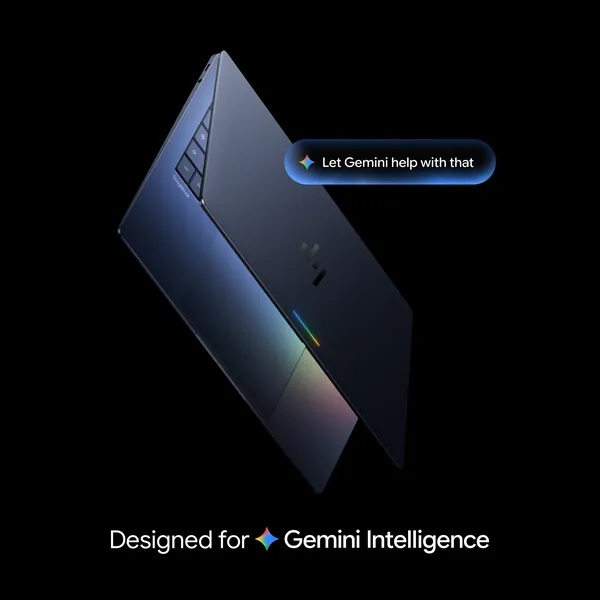
The other shift is how AI appears. Google talks about Gemini Intelligence, but the most interesting pieces are the contact points. Magic Pointer brings Gemini from the cursor; Rambler turns spoken thought into structured notes; Create My Widget generates widgets from natural language. This is less spectacular than a giant model demo, but more relevant for personal computers: AI stops living only in a chat box and tries to grab screen context.
Thurrott notes that every model comes with an NPU above 45 TOPS, at least 16 GB of RAM, 256 GB of storage, and Intel or Qualcomm CPUs. Google argument is that there is enough local power to make assistance feel immediate, but the real question comes later: how many of these features save time every day, and how many feel like attractive shortcuts forgotten after the first week?
The long shadow of the Chromebook
Googlebook is also a political balancing act. Google cannot simply say it is replacing Chromebook, because ChromeOS still has schools, companies, administrators, and manufacturers depending on a simple promise: security, browser, easy management, and competitive price. But it is also hard to ignore that the premium laptop market has changed. Consumers want apps, phone sync, local AI, streaming, creativity, and a developer terminal in the same body.
That is why the architecture promises the best of both worlds: Play Store and Android apps, desktop Chrome with extensions, ChromeOS-inspired security, up to 10 years of updates, and an isolated Linux environment through a certified pKVM hypervisor. For developers, there is also the promise of a full terminal and tools such as Antigravity. It is an ambitious, almost overloaded list, and it shows the real target: not only students or low-cost buyers, but people now looking at MacBook, Surface, Chromebook Plus, or Windows laptops with Copilot.
The risk of promising too much continuity
The problem is that perfect continuity is hard to sell and even harder to deliver. Android has a huge variety of phones, versions, manufacturers, skins, and update policies. A laptop that promises to be the natural companion to that world needs to work well with the best Pixel devices, but also with Samsung, OnePlus, Motorola, Xiaomi, and many others. If the experience varies too much, the Googlebook name may create expectations the ecosystem cannot sustain.
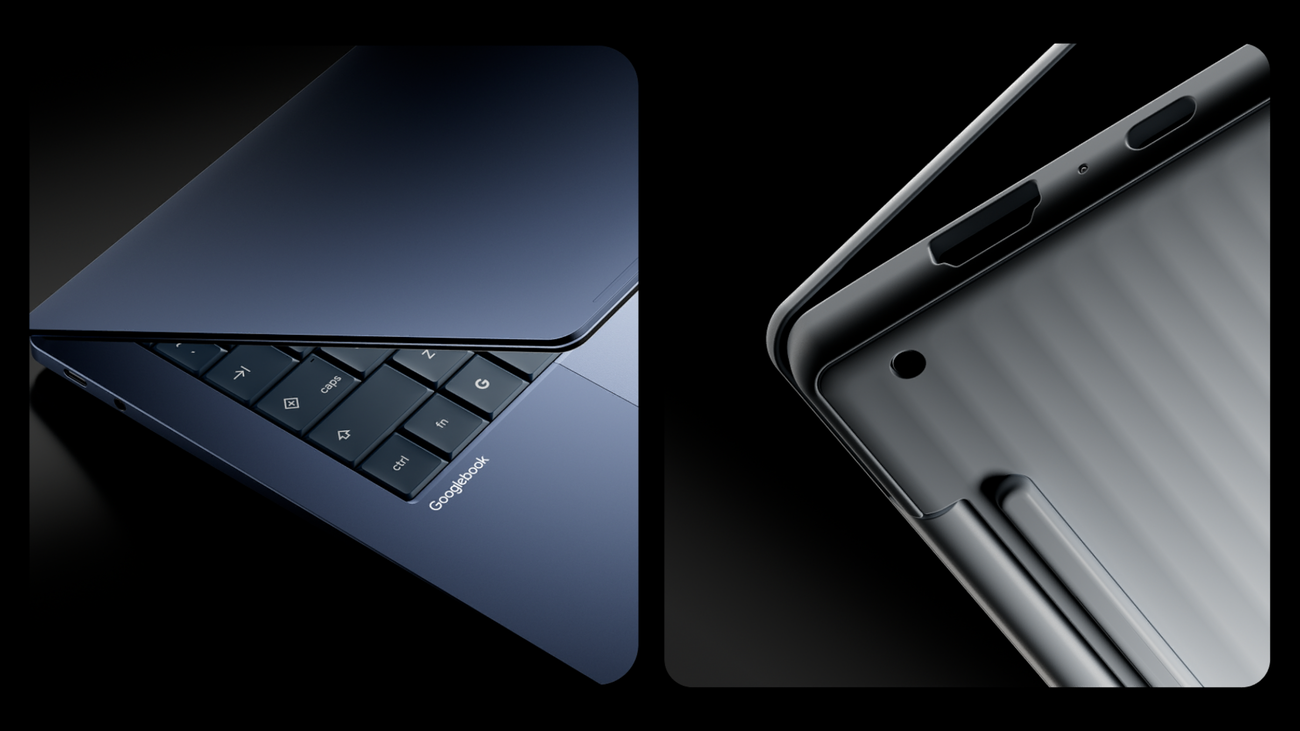
There is also the question of positioning. Starting at $899, this is not the old cheap computer for documents and classrooms. It is a premium bet, with OLED displays up to 2.8K, haptic trackpads, materials such as aluminum, magnesium, and carbon fiber, and even a Glowbar that reacts to startup, battery, and Gemini. All of that helps justify the category, but it also pushes Googlebook closer to very mature competitors.
The news matters now because Google is trying to close a historical gap. Android dominates pockets, Chrome dominates the web, ChromeOS won huge niches, Gemini needs daily surfaces, and manufacturers need a new laptop story. Googlebook combines those four lines into one product. If it is coherent, it could give Android the personal computer it never really had. If it fails, it will look like another name among Pixelbook, Chromebook Plus, and experiments that promised to unite worlds that stayed separate.
filipe255R Sep 29, 2026 10:03 AM
the “The risk of promising too much continuity” section is the part that actually matters. Thurrott notes that every model comes with an NPU above 45 TOPS, at least 16 GB of RAM, 256 GB of storage, and Intel or Qualcomm…. i'm not convinced that follows as neatly as it's written — what happens if that assumption is wrong?