We often talk about Venus as if it were only a failed version of Earth: similar size, similar neighborhood, completely different fate. That comparison hides one hard fact. To study Venus up close, we first have to build a machine that can survive a planet seemingly designed to destroy scientific instruments in less than an hour.
That is why the news from September 24, 2026 matters. NASA announced that an engineering model of the DAVINCI descent probe, short for Deep Atmosphere Venus Investigation of Noble gases, Chemistry, and Imaging, completed a thermal test campaign that ran from August 28 to September 10. According to NASA official report, the sphere was heated six times to 869 degrees Fahrenheit, or 465 degrees Celsius, following roughly the pace of its future fall through the Venusian atmosphere.
We are trying to listen to Venus while it burns the doorbell
The challenge is almost poetic and cruel. DAVINCI cannot remain comfortably in orbit and look from a distance forever. The mission wants to cross the atmosphere, measure noble gases and molecules that preserve clues about the planet climate history, observe pressure, temperature and winds, and take high-resolution images of the Alpha Regio region after the probe emerges beneath the clouds. The NASA mission page frames that ambition directly: to understand whether Venus ever had water and conditions more similar to Earth.
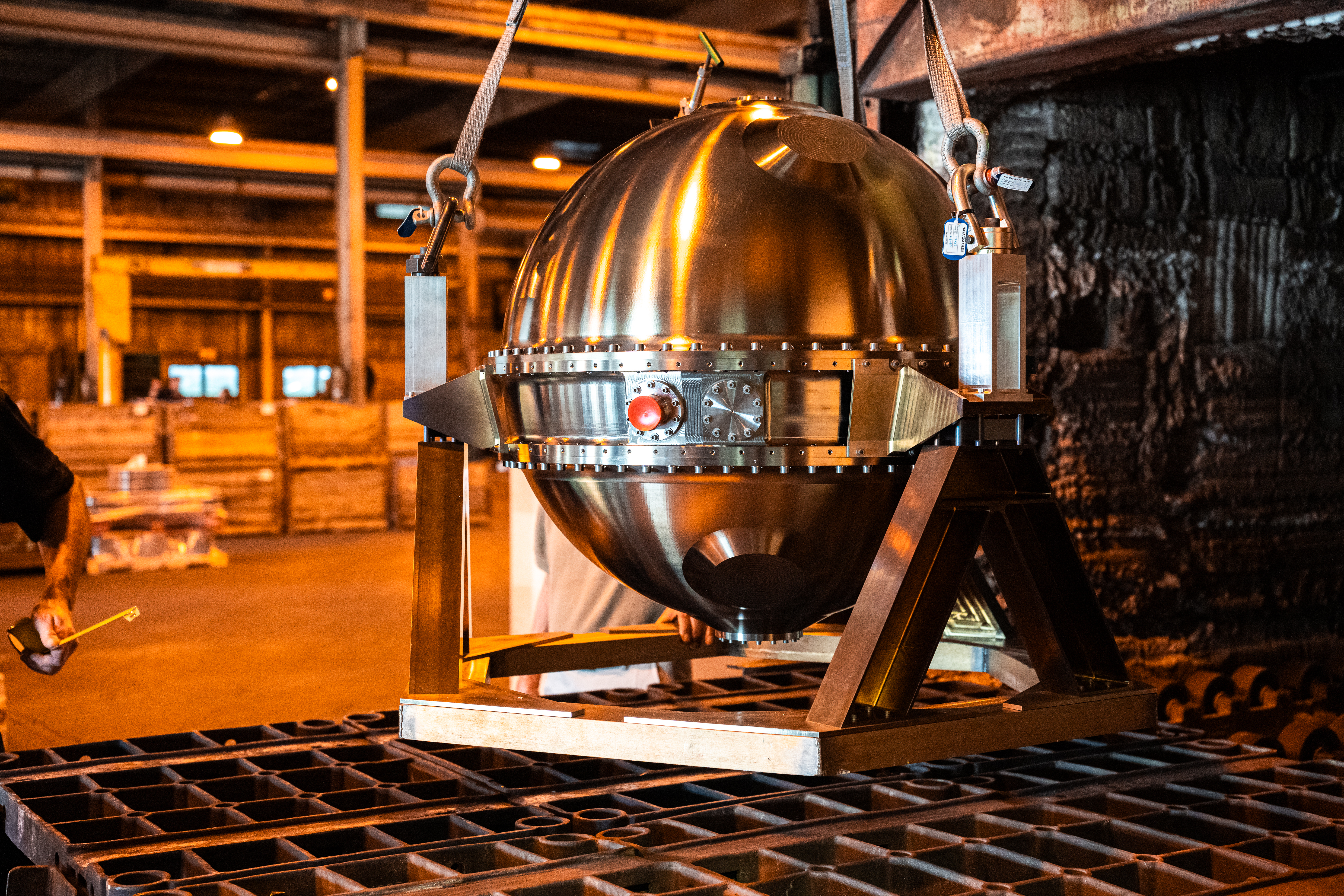
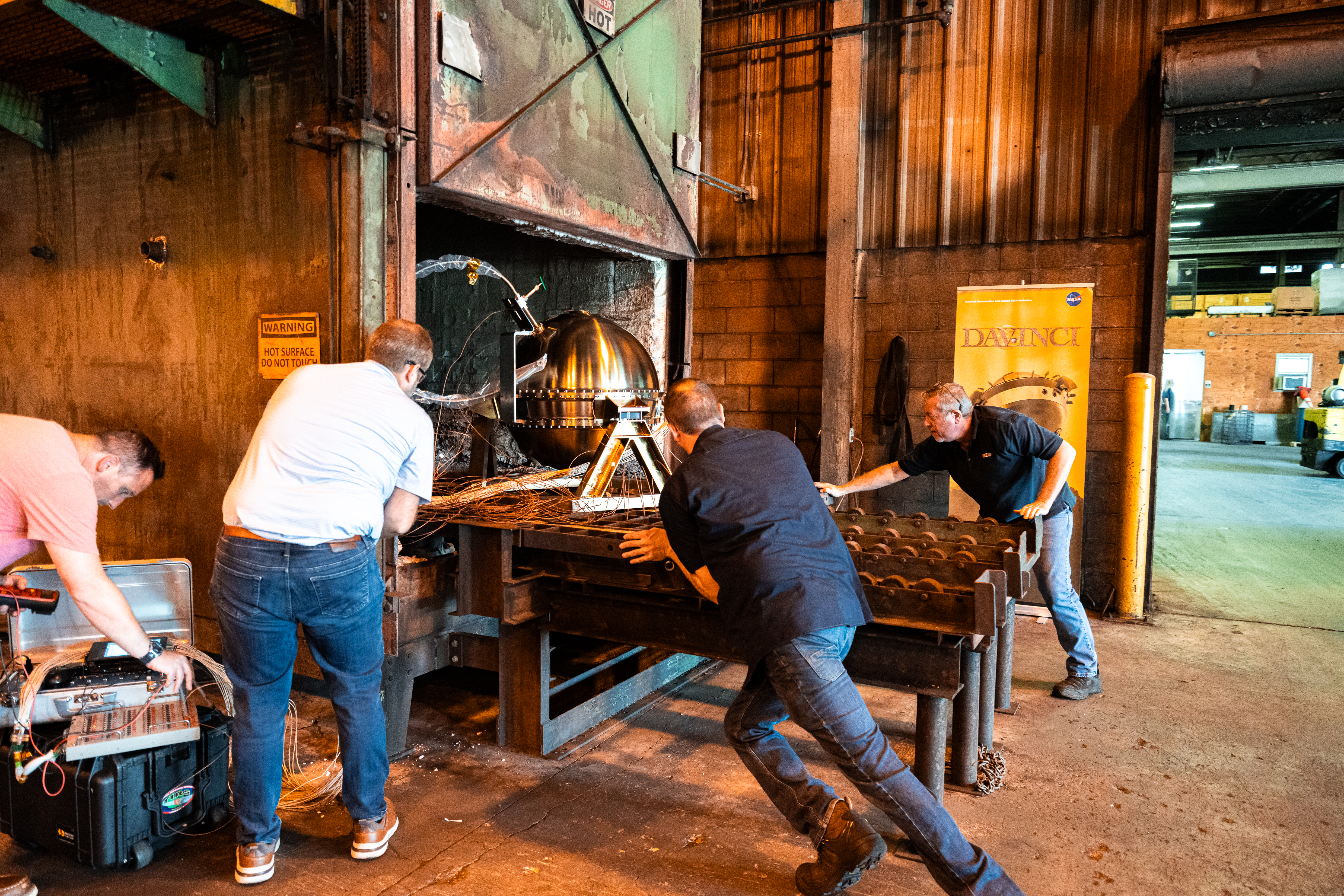
But the science question lives inside an engineering question. How do we let enough Venusian gas in for analysis without letting the whole inferno in as well? The titanium sphere has to protect electronics, cameras, sensors and instruments, while special inlet ports allow atmospheric samples. During the Bedford, Pennsylvania, test, the model was placed inside a ceramic-lined furnace and monitored by more than 100 thermal sensors. This was not simply a neat laboratory photo; it was a rehearsal for a 55-to-60-minute fall through a world with crushing atmosphere and industrial-furnace heat.

The repetition is the important part
A single test would already be useful, but repetition changes the reading. When hardware heats quickly, cools, heats again and repeats the process, problems can appear that a one-off demonstration might hide: loosening, expansion, small distortions, seals behaving differently from the drawing. NASA says the model made it through all six cycles undamaged while protecting hardware that simulated the science instruments. That does not mean the mission is ready to launch tomorrow. It means something more honest and perhaps more valuable: one of the basic descent risks has begun to move from paper promise to tested behavior.
We should also resist turning this milestone into an absolute guarantee. The object tested is an engineering model, not the final flight probe. The mission is still working toward approval to enter final design and fabrication, and Venus will still be Venus when the spacecraft arrives. What changed is confidence in the path. After a summer campaign to demonstrate the imaging system under terrestrial test conditions, the team has now shown that the capsule can face the thermal profile waiting for it. These are technical steps, yes, but they are the steps that separate a brilliant idea from an actual measurement on another planet.
Why this arrives at the right moment
In recent years, Mars has occupied much of the public imagination around planetary exploration. That makes sense: rovers, helicopters, samples, familiar photographs of a cold desert. Venus is a different conversation. It is harder to sell because it does not offer the simple fantasy of walking on the surface. It offers a more uncomfortable question: how did a planet so close to Earth in size follow such an extreme climate path?
DAVINCI matters now because it tries to answer that question with direct data. If it finds chemical signatures consistent with ancient oceans, water loss or atmospheric evolution different from what we imagine, Venus becomes more than an apocalyptic warning. It becomes an archive. A hot, corrosive and short-lived archive, but an archive all the same. We are not going to Venus to confirm a simple moral about greenhouse warming. We are going because the history of rocky planets may be more fragile, more diverse and more dependent on small divergences than we like to admit.
For now, the lasting image is humble: engineers pushing a sphere into a furnace on Earth so that, a few years from now, it can fall through the clouds of another world. Some space missions begin with a launch. This one, in a sense, began by surviving the heat before meeting the planet waiting for it.
Comments (0)
No comments yet.