A small chip hidden inside an industrial camera, a medical wearable, or a factory robot rarely gets the same stage as a datacenter GPU. But on September 9, 2026, Analog Devices paid to change that conversation: the company announced an agreement to acquire Alif Semiconductor for $1.35 billion in cash, with up to $200 million more tied to future contingent consideration.
The official announcement calls this "Physical Intelligence": systems that sense, interpret, and act locally instead of always waiting for the cloud. Reuters put the deal more plainly: ADI wants to combine sensing, signal processing, and power management with Alif's AI processors. The gap between those two descriptions is exactly where the story gets interesting.
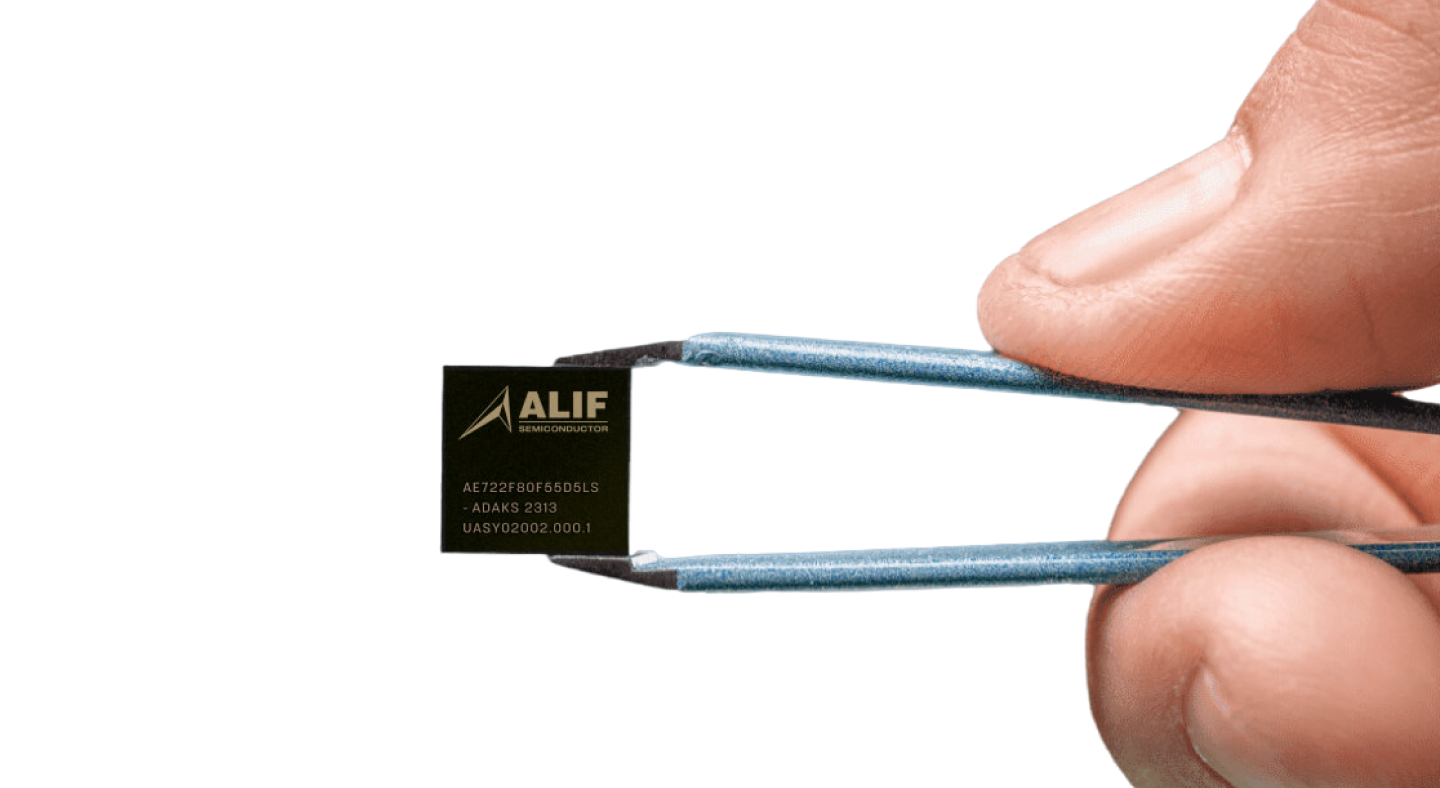
Profile: Alif at the edge
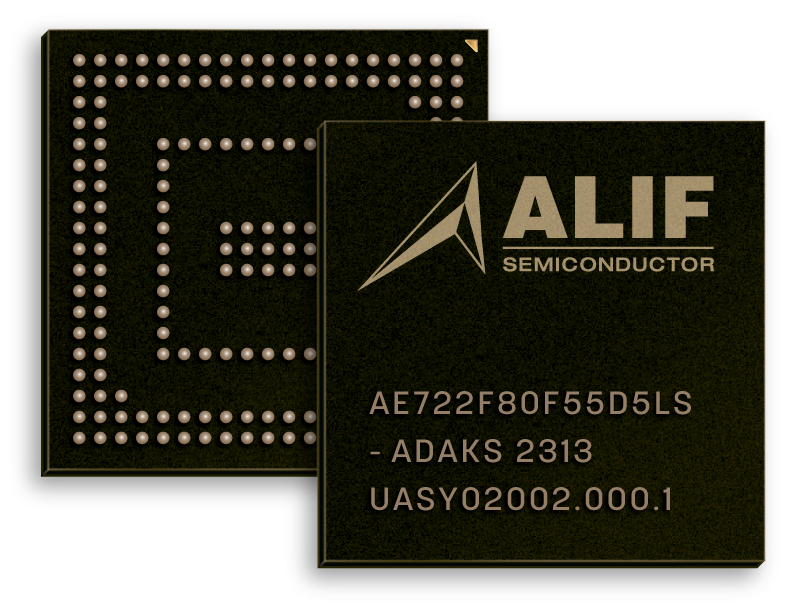
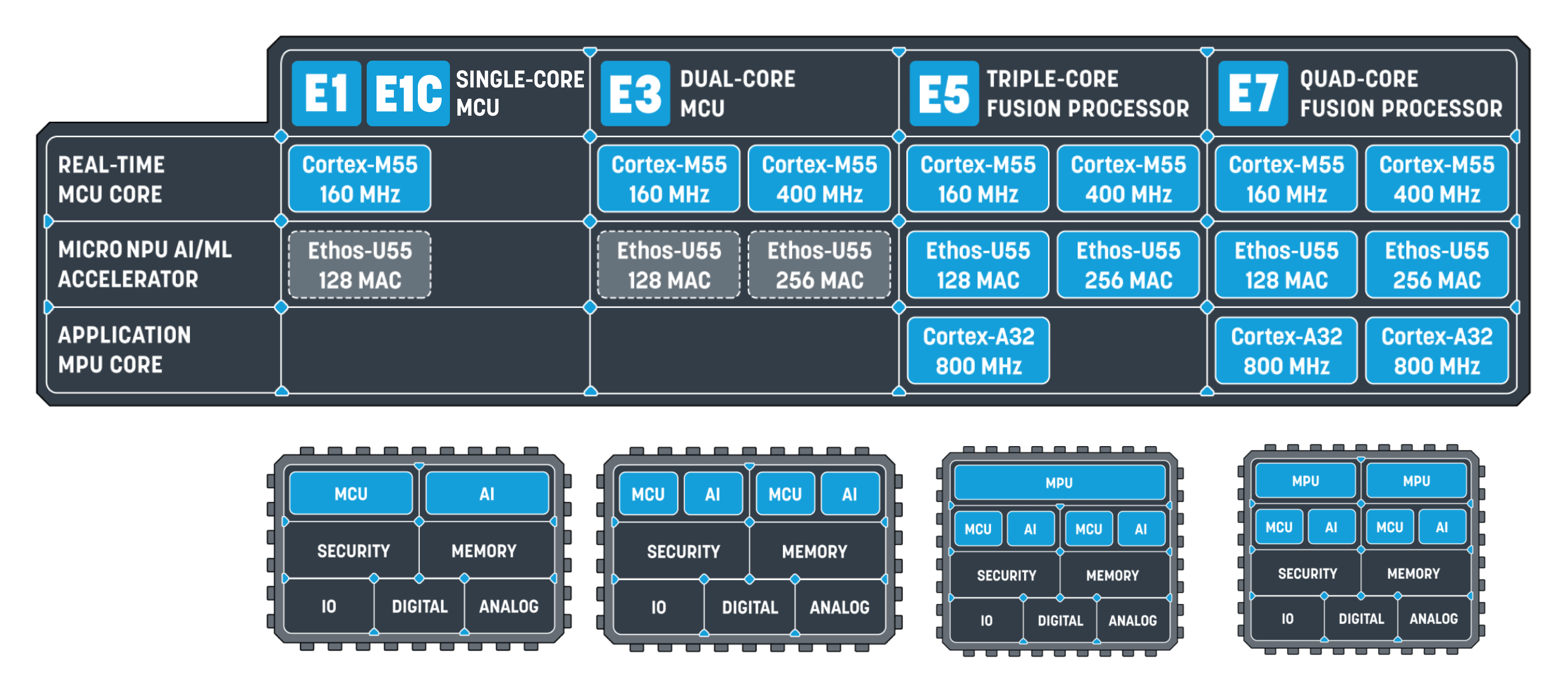
Alif, based in Pleasanton, California, is not selling the fantasy of a giant model writing poetry. It sells low-power microcontrollers and fusion processors with integrated NPUs, connectivity, security, and graphics acceleration. Its Ensemble family was designed to run AI and machine-learning workloads in battery-powered devices or systems with tight energy limits.
That makes Alif a very different kind of company from the names that dominate the public AI conversation. Where a datacenter model can wait hundreds of milliseconds for a remote response, a motor, vibration sensor, security camera, or medical device may need to decide immediately. The value lies less in the absolute size of the model and more in turning motion, sound, image, temperature, or radio signals into local action.
Why ADI was not just buying more silicon
Analog Devices has spent decades at the boundary between the analog and digital worlds. Its components measure, filter, convert, and power signals in factories, cars, medical equipment, telecom, energy, and defense. Buying Alif gives it a stronger digital layer at the same point in the chain: close to the sensor, before data becomes network traffic or gets trapped in a central server.
ADI CEO Vincent Roche framed the move as the next frontier of AI: "embodied and deterministic." The phrase can sound like marketing, but it points to a real requirement. There are systems where latency, privacy, reliability, and power are not details; they define the product. If an industrial line detects dangerous vibration, if a wearable notices an unusual physiological pattern, or if a robot has to react to an obstacle, local decision-making can matter more than sending everything to a remote model.
The moment: the race has already left the datacenter
The deal arrives as the industry starts separating two conversations that once looked like one. The first is the race for enormous clusters to train and serve generative models. The second is the push to put enough intelligence into real devices that they do not always depend on bandwidth, abundant power, and perfect connectivity. Alif fits the second conversation.
Jon Peddie Research described the agreement as buying the "decision layer": the layer that decides next to the signal. That reading is useful because the value is not only accelerating a neural network. It is controlling the whole path between sensor, processing, security, power, and response.
The test comes after the announcement
The deal still has to close, with completion expected before the end of 2026 and subject to regulatory conditions. It also remains to be seen how ADI integrates a digital semiconductor team without diluting what made Alif interesting: low-power focus, heterogeneous architecture, and products already shipping in production.
Still, the main message is already clear. The next phase of AI will not live only in chats, copilots, and servers packed with GPUs. It will show up in machines that measure the physical world and respond without asking a distant cloud for permission. Analog Devices' purchase of Alif matters because it turns that idea into a $1.35 billion bet: AI will also have to fit inside the sensor.
Comments (0)
No comments yet.